Understanding the Role of ISBM in Modern Beverage Packaging
The global beverage industry demands billions of plastic bottles each year. From still water and fresh juices to highly pressurized carbonated soft drinks, each product category presents unique packaging challenges. Beverage manufacturers frequently ask a critical question: can a single type of machinery handle the varied demands of water, juice, and carbonated drink packaging? The answer lies in understanding how the injection stretch blow molding process works and what modern equipment can deliver.
Injection stretch blow molding, commonly abbreviated as ISBM, represents one of the most advanced methods for producing PET containers. Unlike extrusion blow molding or simple injection blow molding, the ISBM process introduces a mechanical stretching step that physically elongates the preform before high-pressure air expands it into its final shape. This biaxial orientation—stretching in both the axial and radial directions—fundamentally changes the molecular structure of PET, giving bottles enhanced clarity, strength, and barrier performance.
For beverage producers evaluating their options, the question is not merely about whether ISBM can produce bottles for water, juice, or carbonated drinks. The real question is whether this technology can produce bottles that meet the rigorous demands of each specific application—internal pressure resistance for carbonation, chemical inertness for acidic juices, and crystal-clear transparency for premium water brands. In this article, we explore those capabilities in depth, drawing on real manufacturing experience and technical analysis from the production floor.
How the One-Step ISBM Process Creates High-Performance Bottles
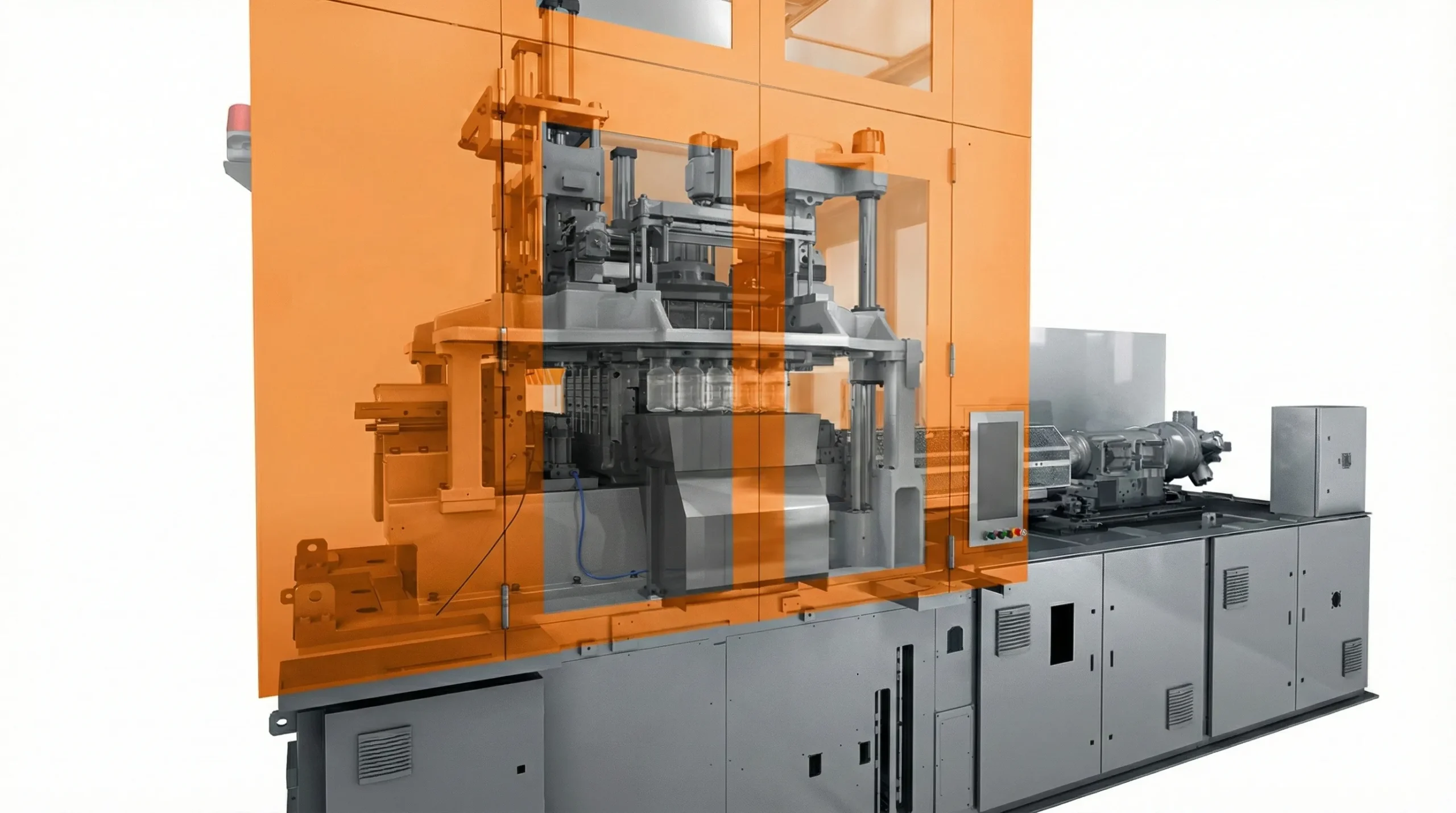
The one-step injection stretch blow molding process integrates four distinct manufacturing stages into a single machine, typically operating on a rotary turntable system. Understanding each stage is essential for appreciating why ISBM bottles outperform those produced by other methods.
Stage 1: Injection
PET resin pellets are dried and fed into a heated barrel where they are plasticized by a precision screw. The molten PET is then injected under high pressure into a preform mold, creating an intermediate tube-like shape with a precisely formed neck finish. The neck threads, tamper-evident rings, and support ledges are all formed to final specifications at this stage. Temperature control accuracy at the injection unit typically reaches ±1°C, which is essential for consistent preform quality.
Stage 2: Conditioning
The preform moves to a temperature conditioning station where zoned heating elements adjust the thermal profile of the preform body. The neck area is kept cool and rigid while the body reaches the ideal temperature for stretching—typically between 95°C and 115°C for PET. This differential heating ensures optimal molecular orientation during the subsequent stretch-blow phase. Because the preform never fully cools to room temperature, the one-step process uses significantly less energy than two-step systems that must reheat cold preforms from scratch.
Stage 3: Stretch Blowing
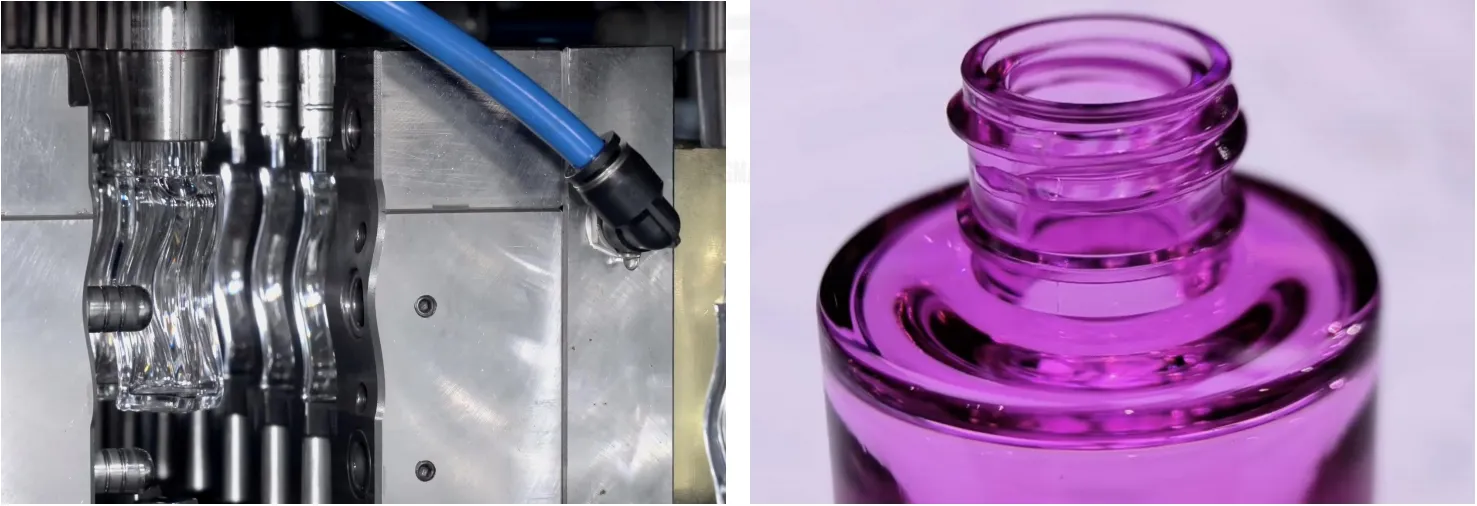
A servo-driven stretch rod mechanically elongates the preform in the axial direction. Simultaneously, high-pressure compressed air—typically at 3.0 to 3.5 MPa—is introduced through Parker or equivalent pneumatic valves to expand the preform radially against the blow mold cavity. This biaxial molecular orientation is what gives ISBM-produced PET bottles their exceptional strength-to-weight ratio, clarity, and gas barrier properties. The stretch ratio is precisely calibrated depending on the target bottle geometry and application.
Stage 4: Ejection
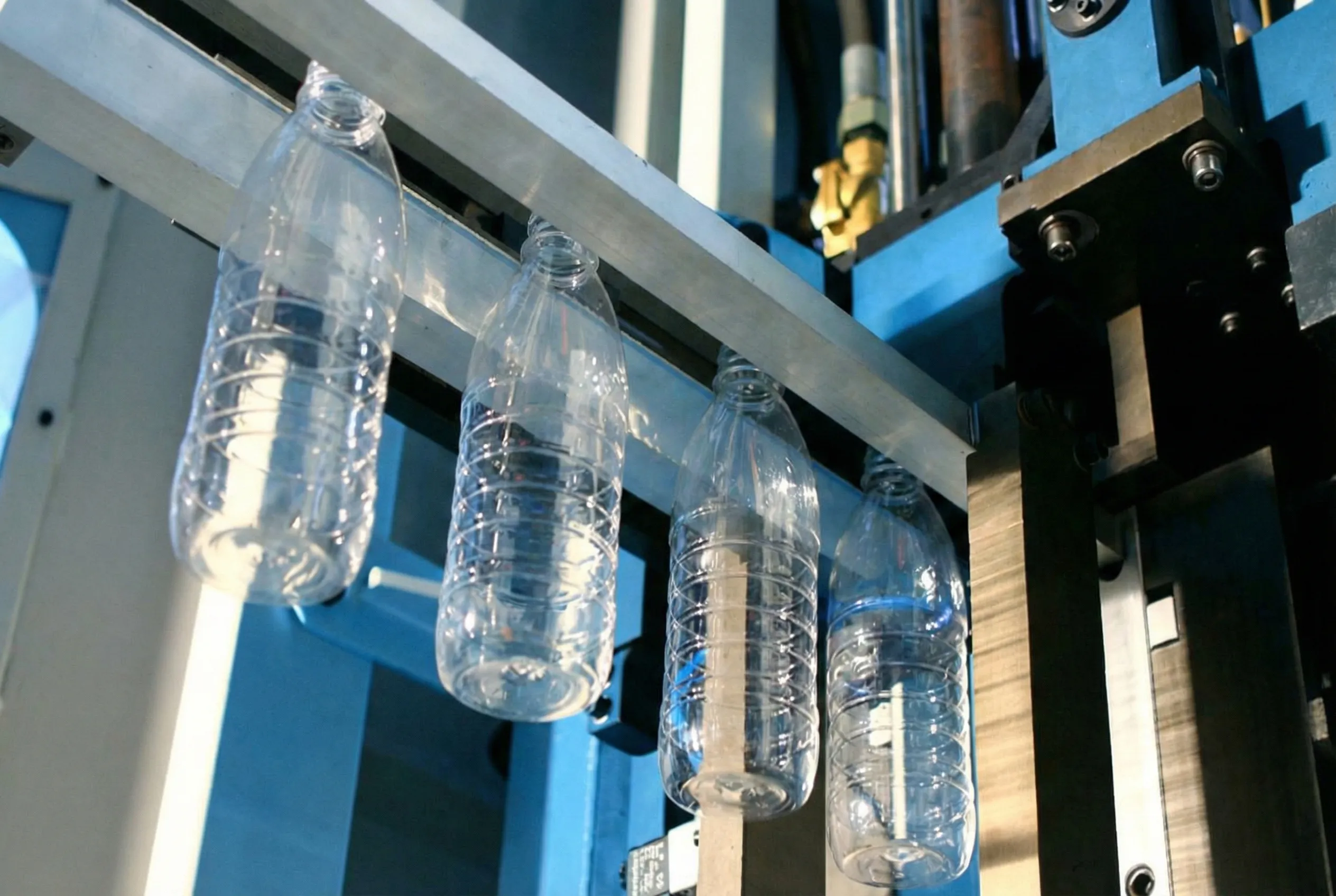
After cooling water sets the bottle shape within the mold cavity—a process that takes 5 to 20 seconds depending on wall thickness—the finished container is ejected automatically. Because the bottle has been handled only by machine mechanisms throughout the entire cycle, the surface remains scratch-free and uncontaminated, a critical requirement for food and beverage packaging. The entire cycle from injection to finished bottle can be completed in as little as 10 to 30 seconds per cavity.
Producing PET Water Bottles with ISBM Technology
Still water is the most straightforward beverage to package in PET bottles, yet consumer expectations for visual clarity and lightweighting make it technically demanding in its own right. A single stage injection stretch blow molding machine is exceptionally well-suited for water bottle production because the one-step process preserves the inherent optical clarity of PET resin without introducing the haze or surface defects that can result from preform reheating in two-step systems.
Water bottles produced on ISBM equipment benefit from several key advantages. The biaxial orientation process creates a uniform wall thickness distribution, which means manufacturers can reduce material usage—sometimes by 15% to 25% compared to extrusion blow molded bottles—without sacrificing top-load strength or drop resistance. For brands that sell millions of units monthly, this material savings translates directly to significant cost reductions.
The precise neck finish achieved during the injection stage ensures a leak-proof seal when paired with standard closures, which is critical for any water bottling operation. Because the preform neck is formed to exact dimensions in a hardened steel mold, there is no need for trimming, deflashing, or secondary neck finishing operations. This means every bottle that leaves the machine is ready for the filling line.
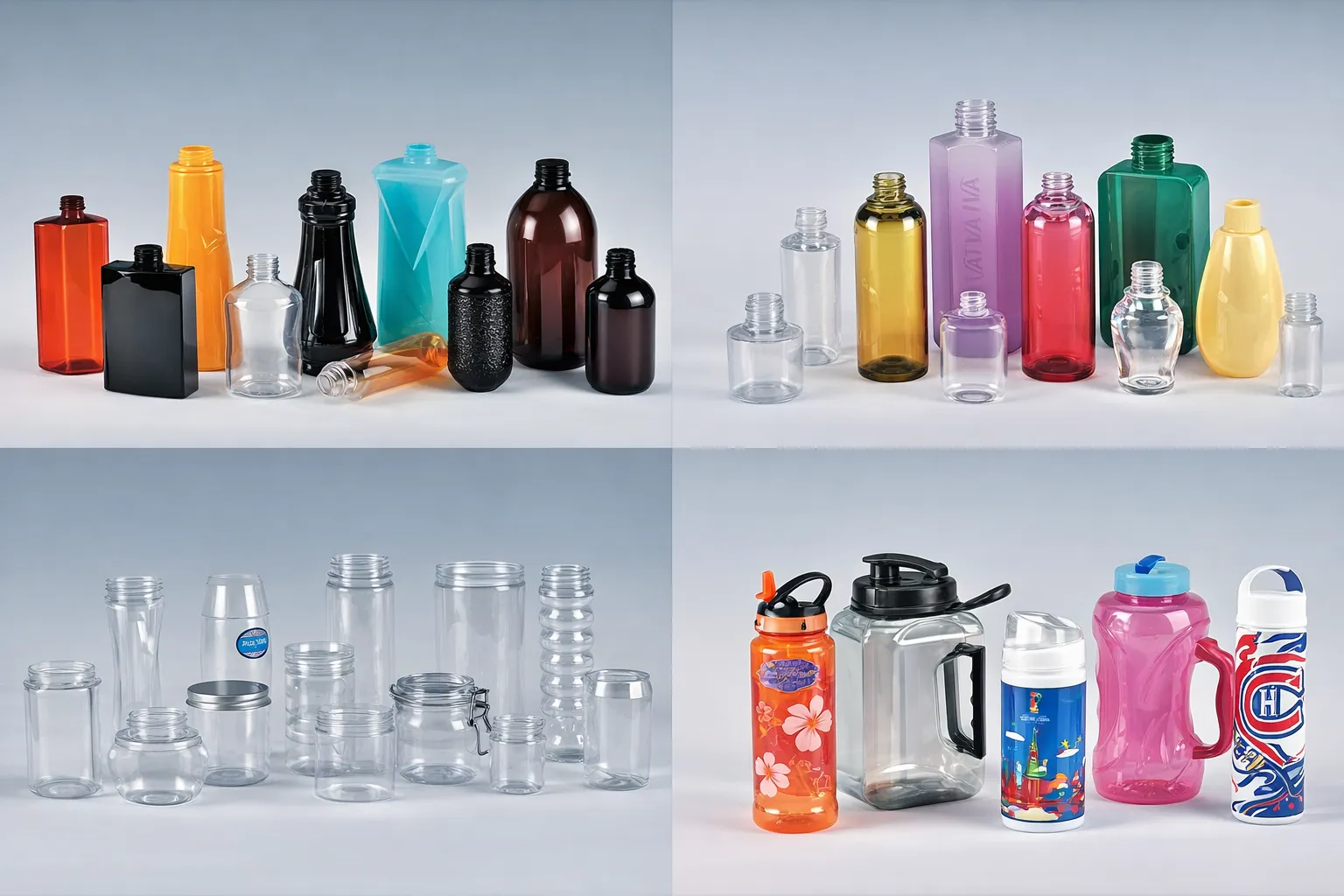
Premium water brands, in particular, favor ISBM technology for its ability to produce bottles with unique shapes, textures, and label panels that reinforce brand identity. The flexibility of the mold design process allows for custom contours, embossed logos, and ergonomic gripping features that would be difficult or impossible to achieve with extrusion blow molding.
PET Juice Bottles: Handling Hot-Fill and Acidic Contents
Juice packaging introduces additional technical requirements that go beyond what is needed for still water. Many juice products require hot-fill processing, where the liquid is filled at temperatures between 85°C and 92°C to ensure microbiological safety. Standard PET bottles produced without heat-set treatment will deform under these conditions, making specialized processing essential.
ISBM machines can produce PET bottles that withstand hot-fill conditions through a combination of material selection and process optimization. By using heat-resistant PET grades or by switching to polypropylene (PP), which naturally withstands temperatures exceeding 120°C, manufacturers can produce juice containers that maintain their dimensional stability throughout the hot-fill and cooling cycle. The conditioning station in a modern ISBM machine allows operators to fine-tune the thermal profile of the preform, optimizing the degree of crystallinity in the finished bottle to enhance its heat resistance.
Acidic juices—such as orange juice, pineapple juice, and lemon-based beverages—present an additional challenge because citric acid and other organic acids can interact with poorly formed container surfaces. The tight molecular structure achieved through biaxial stretching in the ISBM process provides an inherently better barrier against flavor scalping (the absorption of flavor compounds into the bottle wall) and against the migration of package components into the juice. This means juices stored in ISBM-produced bottles retain their intended taste profile for longer periods.
Wide-mouth juice containers and sport drink bottles are also well within the capability of ISBM equipment. The injection stage can form neck finishes up to 120mm in diameter, accommodating the larger openings preferred for thick smoothies, pulpy juices, and yogurt drinks. The ability to produce wide-mouth containers with precise wall thickness and consistent clarity is one area where ISBM technology excels compared to alternative processes.
Among injection stretch blow molding machine manufacturers, Ever-Power stands out for its ability to customize machine configurations specifically for hot-fill and acidic beverage applications. With over two decades of research and development experience, the engineering team provides process optimization support that helps clients achieve the right balance between bottle weight, heat resistance, and production cycle time.
Can ISBM Handle Carbonated Soft Drink Bottles?
Carbonated beverages are the most technically demanding application for PET bottle production. The dissolved carbon dioxide creates internal pressure that can exceed 6 bar (approximately 0.6 MPa) inside the sealed container, especially when exposed to elevated temperatures during summer shipping and storage. A bottle that cannot withstand this pressure will bulge, deform, or even rupture—any of which represents a catastrophic failure for both the manufacturer and the brand.
The biaxial orientation achieved in the ISBM stretch-blowing stage is precisely what makes PET bottles suitable for carbonated applications. When PET molecules are aligned in both the hoop and axial directions, the resulting material has significantly improved tensile strength and creep resistance compared to unoriented or uniaxially oriented PET. This means ISBM-produced bottles can contain the internal pressure of carbonation without dimensional change over the product’s shelf life.
The CO₂ barrier performance of a PET bottle is directly proportional to the degree of molecular orientation achieved during stretch blowing. A well-oriented ISBM bottle can retain carbonation levels within specification for 12 to 16 weeks at ambient storage, making it fully suitable for standard distribution timelines in the soft drink industry.
Beyond pressure resistance, carbonated drink bottles must also feature a champagne-style base design (sometimes called a petaloid base) that distributes internal pressure evenly across the bottom of the container. The precision mold-making capabilities associated with ISBM production allow for exact replication of these complex base geometries with consistent wall thickness in the critical base area, preventing the stress cracking or base inversion failures that can plague poorly made CSD bottles.
It is worth noting that while one-step ISBM machines can produce CSD bottles, the majority of high-volume carbonated beverage production (such as for major cola brands) relies on two-step systems due to their higher output speeds per cavity. However, for regional beverage brands, specialty carbonated drinks, craft sodas, and private-label products, an ISBM machine offers a compelling value proposition. The ability to produce the bottle entirely in-house, from resin to finished container, eliminates dependency on preform suppliers and provides complete control over quality.
Material Versatility: Beyond Standard PET
One of the most significant advantages of modern ISBM technology is its material versatility. While PET is the dominant resin for beverage containers, a well-designed machine can process over 20 different thermoplastic materials. This flexibility opens the door for beverage producers to explore alternative materials that offer specific performance advantages.
PET (Polyethylene Terephthalate)
The industry standard for water, juice, and carbonated beverage containers. Excellent clarity, good barrier properties, lightweight, and fully recyclable. Suitable for cold-fill and aseptic applications.
PP (Polypropylene)
Ideal for hot-fill juices, tea beverages, and medical infusion bottles. Withstands temperatures above 120°C. Offers a hazy, slightly opaque appearance that suits certain product aesthetics. Resistant to most chemical solvents and acids.
PETG (Glycol-modified PET)
Offers superior impact resistance and broader processing window than standard PET. Increasingly popular for premium beverage containers where robustness and visual quality are both paramount.
Tritan (BPA-Free Copolyester)
A premium material choice for reusable water bottles and sports drink containers. Offers exceptional toughness, dishwasher durability, and complete freedom from bisphenol-A. Gaining popularity in the health-conscious consumer segment.
This multi-material capability is a defining characteristic of modern ISBM equipment. When evaluating an isbm machine for sale, beverage producers should verify that the machine’s injection unit, screw geometry, and thermal management systems are designed to handle the specific resins they intend to process. Different materials have different melt temperatures, viscosity profiles, and stretch ratios, so the machine must offer sufficient process parameter flexibility to accommodate these variations.
One-Step ISBM vs. Two-Step Blow Molding: Which Is Better for Beverages?
The beverage industry uses two primary approaches to produce PET bottles: the one-step (ISBM) process and the two-step (reheat stretch blow molding) process. Each has its strengths, and the optimal choice depends on production volume, bottle design requirements, and business strategy.
For water, juice, and carbonated drink producers who prioritize bottle aesthetics, design flexibility, and in-house production control, one-step ISBM offers compelling advantages. The technology is especially well-suited for companies producing custom-designed bottles, premium brand packaging, or moderate production volumes where the design differentiation justifies the investment.
Many manufacturers who previously depended on Japanese-made equipment are now exploring the replacement of Aoki injection stretch blow molding machines with domestically produced alternatives that offer comparable performance at a more accessible price point. Ever-Power’s machines, for example, are engineered with full compatibility with existing ASB and Aoki mold tooling, allowing producers to upgrade their equipment without the expense of replacing their entire mold library.
Quality Control in Beverage Bottle Production
Producing PET bottles for the beverage industry requires strict adherence to quality standards. Food-contact compliance, dimensional accuracy, and consistent mechanical properties are not optional—they are the baseline. ISBM technology inherently supports these requirements through its precision-engineered process controls.
The fully automated nature of ISBM production eliminates the human handling that introduces contamination risks. From the moment resin pellets enter the injection barrel to the moment finished bottles are ejected, there is no manual contact with the product. This closed-loop manufacturing approach is particularly valuable for beverage producers who fill in cleanroom or clean-zone environments.
Modern ISBM machines from leading suppliers incorporate real-time monitoring of critical process parameters including injection pressure, melt temperature, stretch rod position, blow pressure, and cycle time. Any deviation from programmed setpoints triggers alarms, and advanced systems can automatically compensate for minor fluctuations. This closed-loop control ensures that every bottle produced conforms to specification, reducing scrap rates to below 1% in well-optimized production runs.
As a recognized isbm machine manufacturer, Ever-Power integrates Yaskawa servo drives, American Parker pneumatic valves, and nano-far-infrared energy-saving heating systems into its equipment. These high-reliability components ensure that the production machines deliver consistent performance over extended operating cycles, which is essential for beverage producers running 24-hour production schedules.
How to Choose the Right ISBM Machine for Beverage Production
Selecting the appropriate ISBM equipment for beverage bottle production involves evaluating several interconnected factors. The wrong choice can lead to bottlenecks, quality issues, or excessive operating costs. Here are the key considerations that experienced production managers evaluate before making an investment decision.
Bottle Volume Range: Determine the range of bottle sizes your operation requires. ISBM machines are available in configurations that can produce containers from as small as 10ml to over 5 liters. For a beverage operation producing water bottles between 330ml and 1.5 liters, a mid-range machine with multi-cavity tooling will typically provide the best balance of output speed and flexibility.
Cavity Count and Output Requirements: The number of cavities in the blow mold directly determines the machine’s output rate. A 4-cavity machine running at a 15-second cycle time produces approximately 960 bottles per hour. For higher volume requirements, 6-cavity and 8-cavity machines are available, though these require larger clamping force and more powerful injection units.
Material Processing Capability: If your production plan includes both PET water bottles and PP hot-fill juice containers, the machine’s injection unit must accommodate both materials. This means verifiable performance across different melt temperature ranges, barrel configurations, and screw designs optimized for each polymer.
Mold Compatibility: For operations that already have tooling from legacy machines, confirming mold compatibility can save substantial capital. As a trusted isbm mold injection machines supplier, Ever-Power designs its machines with compatibility for major Japanese machine mold standards, enabling seamless tooling transitions.
Energy Efficiency: Energy consumption is a significant operating cost in continuous bottle production. Look for machines that feature servo-driven hydraulics, efficient heating systems (such as nano-far-infrared heaters), and intelligent power management that reduces consumption during idle periods. A difference of even 10% in energy consumption compounds into meaningful savings over a year of 24/7 operation.
Real-World Applications Across the Beverage Spectrum
The versatility of ISBM technology extends across virtually every segment of the beverage industry. Understanding how the technology applies to specific product categories helps manufacturers plan their equipment investments with confidence.
💧 Still & Sparkling Water
Standard PET bottles from 200ml to 2 liters. Lightweight designs with minimal material usage. Crystal-clear transparency for shelf appeal. Support for both flat and carbonated water products.
🍊 Fruit Juices & Nectars
Hot-fill capable bottles in PET or PP. Enhanced barrier properties for acidic content. Wide-mouth options for thick juices and smoothies. Custom shapes that communicate freshness and natural origins.
🥤 Carbonated Soft Drinks
Pressure-resistant PET bottles with petaloid base designs. High CO₂ barrier for extended shelf life. Suitable for craft sodas, regional brands, and specialty carbonated beverages.
🍵 Tea & Functional Drinks
Hot-fill ready containers for RTD teas. UV-protective tinted PET options for light-sensitive formulations. Ergonomic designs for on-the-go consumption. Growing segment with strong demand for premium packaging.
Each of these applications has been successfully served by ISBM technology, and the continued development of machine capabilities is expanding the range of bottle sizes, shapes, and performance characteristics that can be achieved. The key is selecting the right machine configuration and working with a knowledgeable equipment partner who can provide the technical support needed to optimize each specific application.
Sustainability and Environmental Advantages of ISBM Bottle Production
Environmental sustainability has become a central concern in the beverage packaging industry. Consumer demand for reduced plastic waste, lower carbon footprints, and greater recyclability is driving packaging decisions at every level. ISBM technology aligns well with these priorities in several important ways.
First, the lightweighting capability of ISBM-produced bottles directly reduces material consumption. By achieving optimal molecular orientation, the process produces bottles that maintain structural integrity with thinner walls, meaning less plastic per container. A 500ml water bottle that weighs 18 grams when produced by extrusion blow molding might weigh only 13 to 14 grams when produced by ISBM, a reduction of over 20%. Multiplied across millions of units, this represents a significant decrease in resin consumption and downstream waste.
Second, the one-step process eliminates the energy-intensive preform reheating stage required in two-step systems. Industry estimates suggest that one-step ISBM machines use 20% to 40% less energy per bottle compared to equivalent two-step configurations. For a production line running continuously, this translates to meaningful reductions in both energy costs and associated carbon emissions.
Third, the precision of the ISBM process results in extremely low scrap rates. Because the preform is produced and blown within the same machine under continuous process control, there is minimal material waste from defective preforms, damaged bottles, or startup scrap. The PET resin that is used is almost entirely converted into sellable product, and any minimal scrap can be ground and recycled into non-food-contact applications.
Furthermore, PET is one of the most widely recycled plastics globally, and bottles produced by ISBM are fully compatible with existing PET recycling streams. The high clarity and absence of mixed materials in ISBM bottles makes them ideal candidates for bottle-to-bottle recycling programs, where collected bottles are processed back into food-grade PET resin for new bottle production.
The growing interest in bio-based PET and recycled PET (rPET) is also compatible with ISBM processing. Many modern machines can process rPET blends with appropriate adjustments to drying parameters and injection temperatures, enabling beverage producers to incorporate recycled content into their packaging without compromising bottle quality.
Technical Considerations for Carbonated Beverage Bottles
To produce carbonated soft drink (CSD) bottles that perform reliably throughout their shelf life, several technical parameters must be carefully controlled during the ISBM process. Understanding these parameters helps production engineers optimize their processes and avoid common pitfalls.
The stretch ratio—defined as the product of the axial stretch ratio and the hoop stretch ratio—is one of the most critical variables for CSD bottles. For PET beverage bottles intended for carbonated applications, an overall stretch ratio of approximately 10:1 to 12:1 is typical. Higher stretch ratios produce better molecular orientation and thus better CO₂ barrier properties, but exceeding the optimal range can lead to stress whitening, uneven wall thickness, or base cracking under pressure.
The preform design is equally important. CSD bottle preforms are typically designed with thicker walls in the base area to ensure adequate material distribution in the highly stressed petaloid base geometry. The conditioning temperature must be precisely controlled to ensure the base region is at the right temperature for stretching—too hot and the material will thin excessively; too cool and it will not stretch uniformly, creating weak points.
Blow pressure timing is another critical parameter. For CSD bottles, the pre-blow phase uses lower pressure (approximately 0.8 to 1.2 MPa) to initiate the bubble formation, followed immediately by high-pressure air (3.0 to 3.5 MPa) to fully form and cool the bottle against the mold surface. The timing of this pressure transition—measured in milliseconds—affects the final wall thickness distribution and the bottle’s ability to resist the internal pressure of carbonation.
Creep testing is the standard quality assurance method for CSD bottles. In this test, filled and capped bottles are stored at elevated temperatures (typically 38°C) and measured for volume change over time. Bottles produced on well-calibrated ISBM equipment should show less than 3% volume increase over the standard test period, confirming their suitability for carbonated beverage distribution.
Getting Started: From Concept to Production-Ready Bottles
For beverage manufacturers ready to invest in ISBM technology, the path from concept to production typically follows a structured development process. Understanding this process helps set realistic timelines and budget expectations.
The process begins with bottle design, where the manufacturer works with the equipment supplier to define the bottle geometry, capacity, material, and performance requirements. Advanced 3D design software allows the engineering team to simulate the stretch-blow process and predict wall thickness distribution before committing to mold construction. This virtual prototyping step reduces the number of physical mold iterations needed, saving time and money.
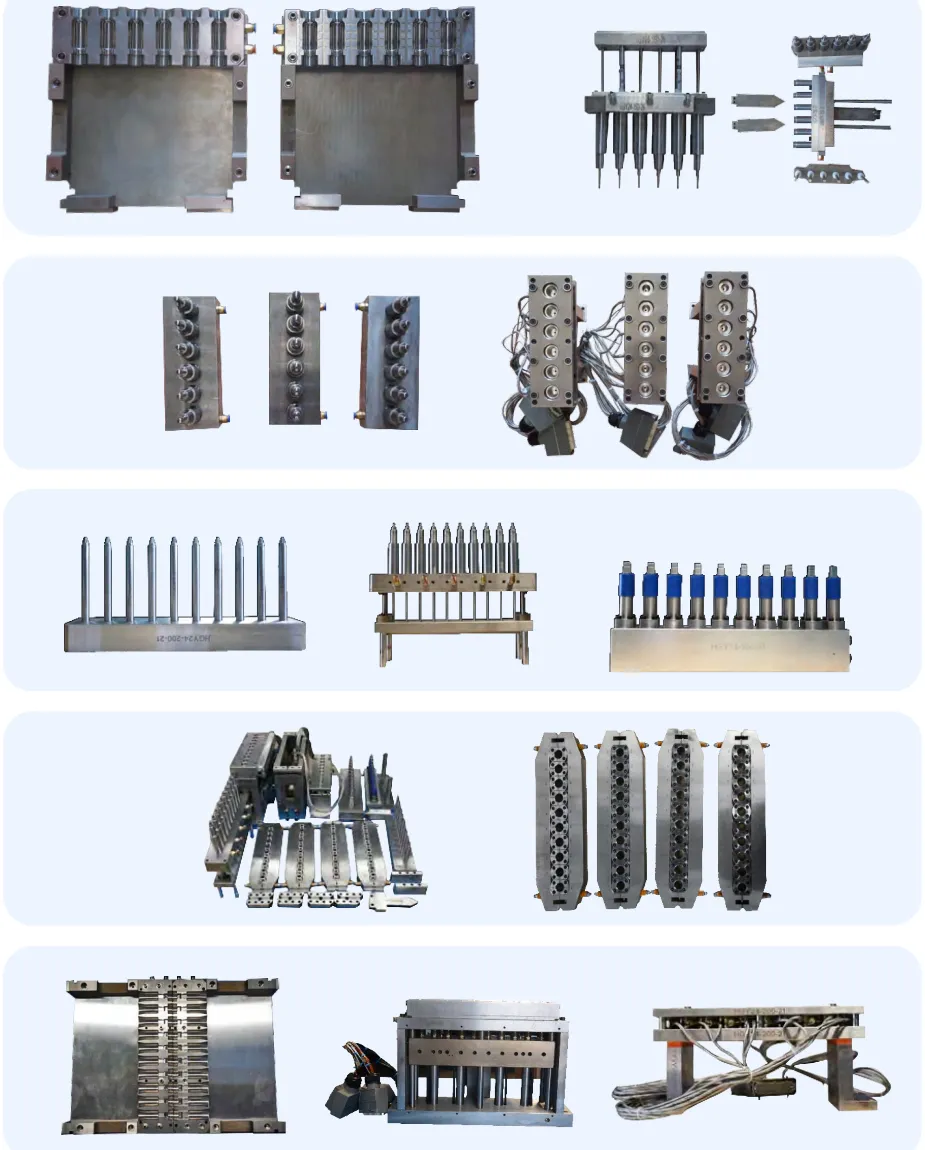
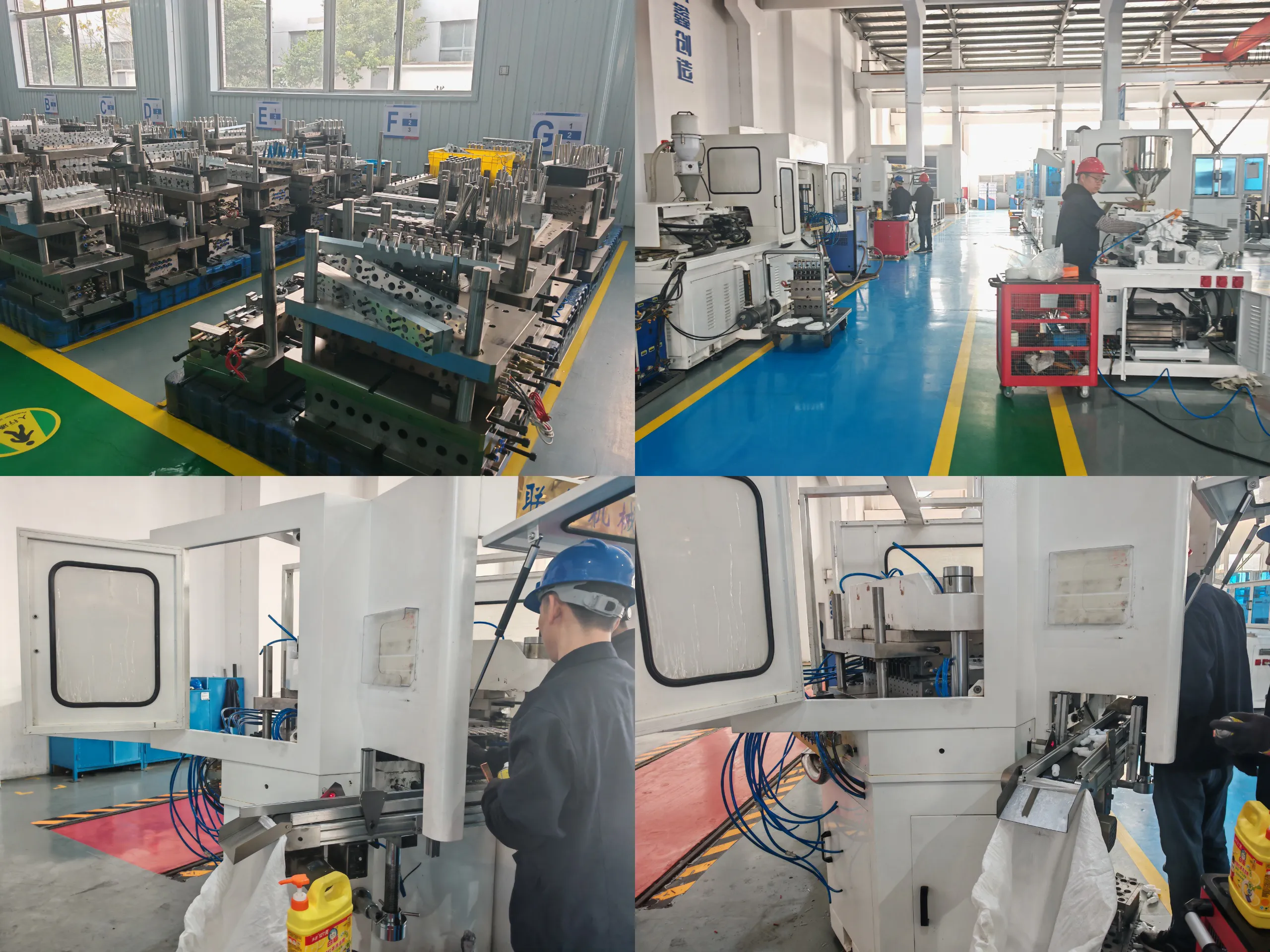
Next comes mold manufacturing, where high-precision CNC machining produces the injection preform molds and blow molds from hardened steel. The quality of the mold directly determines the quality of the bottles it produces, so this is an area where cutting corners leads to problems. Reputable ISBM equipment manufacturers like Ever-Power maintain in-house mold making capabilities, ensuring tight quality control over this critical component.
Machine installation and commissioning typically takes one to two weeks, depending on the complexity of the production line. This includes mechanical setup, utility connections, electrical integration, and process parameter optimization. A comprehensive operator training program ensures that the client’s production team can run the equipment safely and efficiently from day one.
Finally, trial production runs are conducted to validate bottle quality against all specified requirements—dimensional accuracy, wall thickness uniformity, burst pressure, top-load strength, drop test performance, and visual appearance. Only after all quality parameters are confirmed does the line transition to full-scale commercial production.