Introduction: Understanding Injection Stretch Blow Molding
Injection stretch blow molding, commonly abbreviated as ISBM, is one of the most widely adopted manufacturing processes for producing hollow plastic containers with exceptional clarity, strength, and dimensional precision. From the tiny 5 ml eye-drop vial in your medicine cabinet to the 2-liter sparkling water bottle on your kitchen table, ISBM technology is responsible for billions of containers that reach consumers every single day across the globe.
At its core, the ISBM process involves three fundamental stages: first, molten plastic resin is injected into a preform mold to create a test-tube-shaped intermediate product; second, that preform is mechanically stretched along its vertical axis; and third, high-pressure air inflates the stretched preform radially until it conforms to the shape of a blow mold cavity. The biaxial orientation that occurs during stretching and blowing is what gives ISBM-produced bottles their remarkable combination of lightweight construction, high transparency, and excellent barrier properties against gases and moisture.
However, not all ISBM systems are created equal. The industry broadly recognizes two distinct approaches to carrying out this process: the one-step method (also called single-stage) and the two-step method (also called two-stage). Choosing between these two approaches is one of the most consequential decisions a packaging manufacturer will make, because it affects everything from initial capital investment and floor space requirements to energy consumption, labor costs, product quality, and long-term operational flexibility.
In this guide, we will walk through how each method works in detail, compare them across every dimension that matters to a production manager or plant engineer, and explain why Ever-Power — a specialized isbm machine manufacturer — has built its entire product line around the one-step approach. Whether you are planning a new production line from scratch, evaluating the replacement of Aoki injection stretch blow molding machines, or simply researching the latest developments in container manufacturing technology, this article will give you the technical foundation you need to make an informed decision.
How Two-Step Injection Stretch Blow Molding Works
The two-step method, sometimes referred to as the reheat-and-blow process, divides the manufacturing sequence into two entirely separate phases that are typically carried out on different machines, often in different locations, and sometimes even by different companies.
①
Phase One: Preform Injection
A standard injection molding machine melts plastic resin pellets and injects the molten material into a multi-cavity preform mold. The preforms cool completely, are ejected, and then stored — sometimes for hours, days, or even weeks — before moving to the next phase. During storage, preforms may be transported to a separate facility, stacked on pallets, and shipped by truck. This interval introduces the risk of contamination from dust, moisture absorption, and surface scratches from handling.
②
Phase Two: Reheat and Blow
The cold preforms are loaded into a separate stretch blow molding machine. Infrared heaters reheat the preforms to the precise temperature profile required for stretching. Once conditioned, a stretch rod extends into each preform while compressed air inflates it against the walls of the blow mold. The finished bottle is cooled, ejected, and sent to quality inspection. The reheating step is energy-intensive and represents one of the largest operating cost penalties of the two-step approach.
The two-step method has historically been popular for very high-volume commodity applications — such as standard PET water bottles produced in the hundreds of millions — because the preform injection phase can run at extremely high cavity counts (48, 72, or even 144 cavities per cycle) and the reheat-blow phase can achieve very fast cycle times on dedicated rotary machines. However, this volume advantage comes at the cost of additional equipment, additional energy for reheating, additional labor for material handling, additional floor space for preform storage, and additional quality risk from contamination during the gap between stages.
How One-Step Injection Stretch Blow Molding Works
The one-step method takes a fundamentally different approach by integrating every stage of production into a single machine. Raw plastic resin enters one end of the machine, and finished, ready-to-fill bottles emerge from the other end — with no intermediate storage, no reheating, and no manual handling of preforms at any point in the process. This is the technology that Ever-Power has chosen to specialize in, and it is the technology behind every single stage injection stretch blow molding machine in our product lineup.
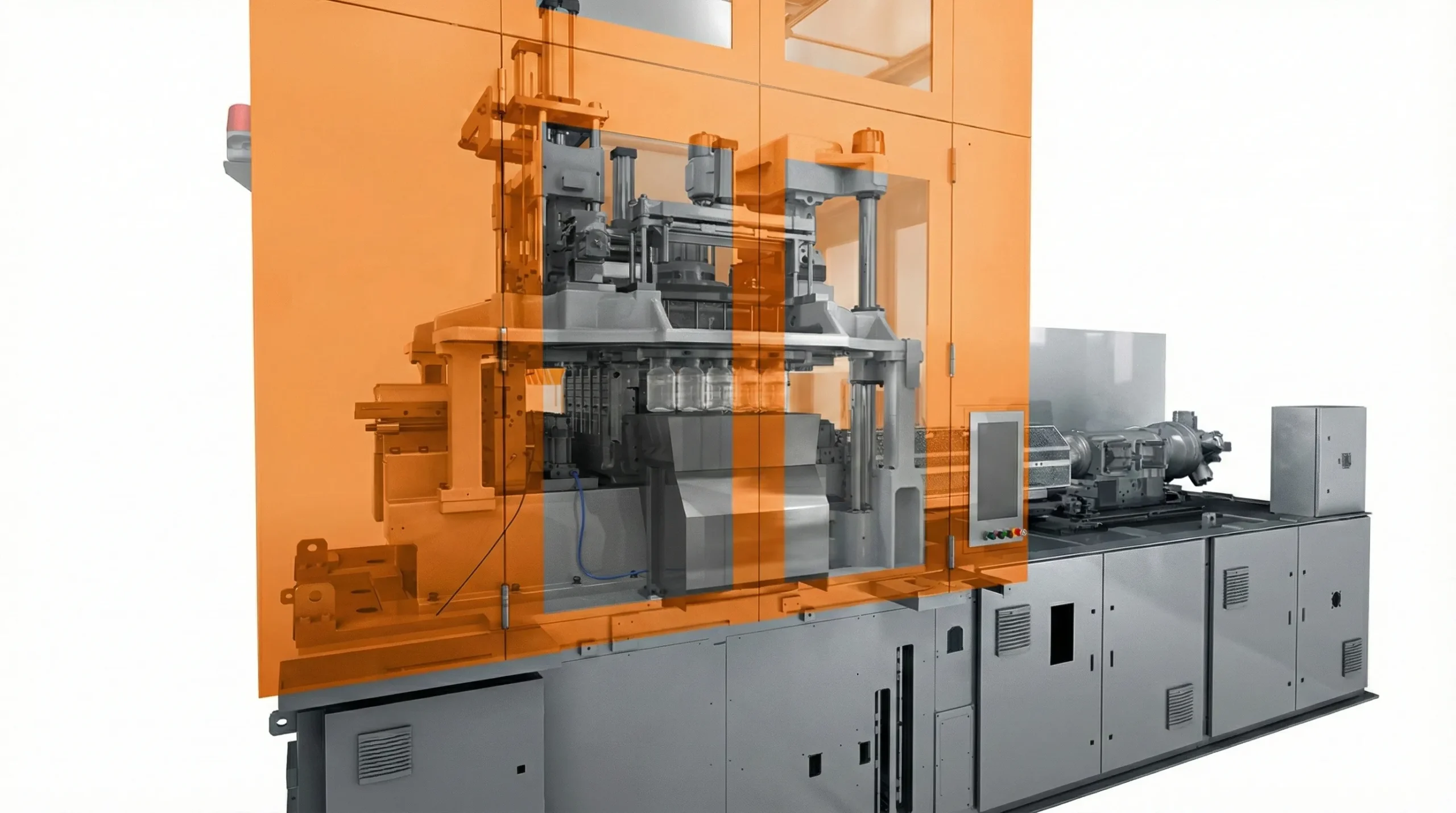
Ever-Power four-station one-step injection stretch blow molding machine
In a typical four-station one-step machine — such as the models manufactured by Ever-Power — the production cycle proceeds as follows through four rotary stations that operate simultaneously on different preforms:
⚙
Station 1: Injection
Plastic resin pellets are fed from a hopper into the injection barrel, where they are heated, plasticized, and injected under high pressure into a preform mold. The preform takes shape with a precisely formed threaded neck finish and a uniform wall thickness profile that has been engineered for optimal stretching in a later station.
🌡
Station 2: Conditioning
The freshly injected preform — still retaining most of its heat from the injection stage — rotates into a temperature conditioning station. Here, precise heating or cooling adjustments are applied to different zones of the preform body to establish the ideal thermal profile for biaxial stretching. This is a critical step that directly determines final wall thickness distribution.
💨
Station 3: Stretch-Blow
A mechanical stretch rod descends into the conditioned preform, elongating it vertically. Simultaneously, high-pressure compressed air inflates the preform outward against the blow mold cavity walls. This biaxial orientation aligns polymer molecular chains in two perpendicular directions, dramatically improving the container’s tensile strength, impact resistance, gas barrier properties, and optical clarity.
✅
Station 4: Ejection
The finished bottle is cooled within the mold, released, and automatically ejected onto an output conveyor. Because the bottle has never left the controlled environment of the machine, it arrives at the filling line free of scratches, dust, moisture, or any other form of external contamination — a feature that is absolutely essential for pharmaceutical and food-grade applications.
The key engineering advantage of this approach is that the preform never fully cools between injection and blowing. Because the residual heat from the injection stage is retained and merely fine-tuned during the conditioning step, the one-step process eliminates the massive energy penalty of reheating cold preforms from room temperature back up to stretching temperature. Industry data consistently shows that this alone can reduce total energy consumption by 30 to 40 percent compared to equivalent two-step production.
Side-by-Side Comparison: One-Step vs. Two-Step ISBM
The following comparison covers the ten most important dimensions that plant managers, production engineers, and procurement teams should evaluate when choosing between one-step and two-step ISBM systems.
Energy Efficiency: A Closer Look at the Numbers
Energy cost is often the single largest variable operating expense in a blow molding facility, and it is where the one-step method demonstrates its most quantifiable advantage. In a two-step system, the preforms are cooled to ambient temperature after injection, stored, and then reheated to approximately 100–120°C (for PET) using banks of infrared lamps before they can be stretched and blown. This reheating cycle is inherently wasteful because it requires the input of thermal energy that was already present in the preform immediately after injection but was deliberately discarded during cooling.
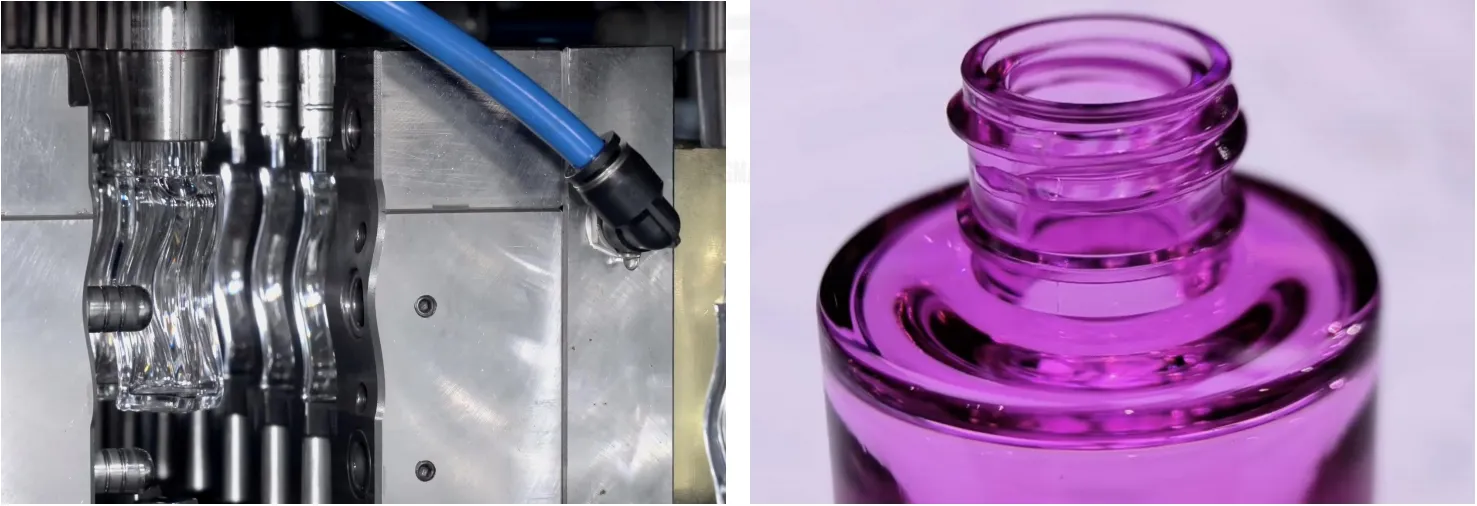
Bottle performance characteristics achieved through one-step ISBM technology
In a one-step machine, the preform transitions directly from injection to conditioning to blowing while still retaining the majority of its process heat. The conditioning station only needs to make fine adjustments — slightly warming certain zones or slightly cooling others — rather than bringing the entire preform up from room temperature. Real-world energy audits conducted by injection stretch blow molding machine manufacturers across various installation sites have consistently documented energy savings in the range of 30 to 40 percent when comparing one-step systems to equivalent two-step configurations producing the same bottle at comparable output rates.
For a facility running three shifts per day, 300 days per year, this energy differential can translate into tens of thousands of dollars in annual electricity savings — a figure that compounds dramatically over the typical 15 to 20 year service life of an ISBM machine. When combined with the lower maintenance costs associated with operating a single integrated machine rather than two separate systems plus ancillary equipment, the total cost of ownership argument for one-step technology becomes very compelling.
Additionally, Ever-Power machines utilize nano-far-infrared energy-saving heating rings on the injection barrel, which maximize thermal transfer efficiency to the resin while minimizing electrical draw. Advanced servo-driven hydraulic systems further reduce energy consumption by delivering power on demand rather than running continuously, as older fixed-displacement pump systems do.
Product Quality and Contamination Control
For industries where product purity is non-negotiable — pharmaceuticals, infant nutrition, medical devices, and premium cosmetics — the contamination control advantages of one-step ISBM are not merely a convenience; they are a regulatory and commercial necessity.
In a two-step system, preforms are exposed to the ambient factory environment during ejection from the injection mold, transfer to storage containers, storage itself (which can last anywhere from hours to weeks), transport to the blow molding line, and loading into the reheat oven. At every one of these touchpoints, there is an opportunity for dust particles, airborne microorganisms, moisture, oils from human hands, and abrasive surface contact to compromise the integrity of the preform surface. Even in well-managed factories with good housekeeping practices, achieving the same level of cleanliness as a fully enclosed single-stage machine is extremely difficult and expensive with a two-step approach.
In a one-step system, the preform is born, conditioned, stretched, blown, and ejected within the same enclosed machine frame without ever being touched by human hands or exposed to the open factory floor. The resulting bottles are pristine — free of scratches, fingerprints, embedded particles, or moisture-related haze. This is why major pharmaceutical companies and premium cosmetics brands overwhelmingly prefer one-step ISBM technology for their primary packaging, and it is the reason that Ever-Power, as a trusted isbm mold injection machines supplier, focuses exclusively on this approach.
💫
Optical Clarity
Biaxial orientation during stretch-blow aligns polymer chains uniformly, producing bottles with exceptional transparency — critical for cosmetic and premium beverage packaging where visual appeal directly influences consumer purchase decisions.
🛡
Barrier Performance
Controlled molecular orientation enhances the gas barrier properties of the container wall, reducing oxygen and CO₂ permeation. This extends shelf life for oxygen-sensitive products like pharmaceutical liquids, essential oils, and carbonated beverages.
💪
Mechanical Strength
Biaxially oriented bottles can achieve over 30% higher tensile strength than non-oriented equivalents. This allows manufacturers to lightweight their containers — using less resin per bottle — while maintaining or even exceeding the structural performance of heavier, non-oriented designs.
When Should You Choose One-Step Over Two-Step?
Neither method is universally superior in every conceivable scenario. The right choice depends on your specific production requirements, quality standards, material needs, and business model. However, the one-step approach is strongly favored in the following situations:
You produce high-value containers where surface quality is paramount. Pharmaceutical bottles, cosmetic jars, medical device packaging, and infant feeding bottles all fall into this category. The scratch-free, contamination-free output of a one-step machine is essentially a prerequisite in these markets.
You need to process specialty resins beyond standard PET. One-step machines from Ever-Power handle PC, Tritan, PETG, PP, PPSU, PLA, and many other engineering polymers that are difficult or impossible to process reliably in standard two-step reheat systems due to their different thermal profiles and crystallization behaviors.
You run a high-mix production schedule with frequent changeovers. If you produce dozens of different bottle shapes and sizes for various customers, the one-step method allows you to switch molds on a single machine rather than coordinating changeovers across two separate machines plus conveying systems.
You need to minimize factory floor space. A single integrated one-step machine occupies a fraction of the space required by a two-step installation that includes an injection molding machine, preform silos, conveyor infrastructure, and a separate blow molding machine.
You want to reduce your total cost of ownership over the long term. When you factor in energy savings from eliminated reheating, reduced labor from single-machine operation, lower maintenance costs from fewer pieces of equipment, reduced reject rates from better contamination control, and less raw material waste from higher material utilization, the one-step approach frequently delivers a lower per-bottle cost even at moderate production volumes.
Ever-Power One-Step ISBM Machine Product Line
As a dedicated one-step injection stretch blow molding machine specialist, Ever-Power offers a comprehensive range of models designed to serve every segment of the precision container market — from compact three-station units ideal for small-batch pharmaceutical vials to high-output six-station systems built for large-scale cosmetic and beverage production. Every machine in our lineup is engineered for compatibility with existing Japanese ASB and Aoki molds, making us a preferred partner for manufacturers seeking a cost-effective isbm machine for sale that integrates seamlessly with their existing tooling investments.
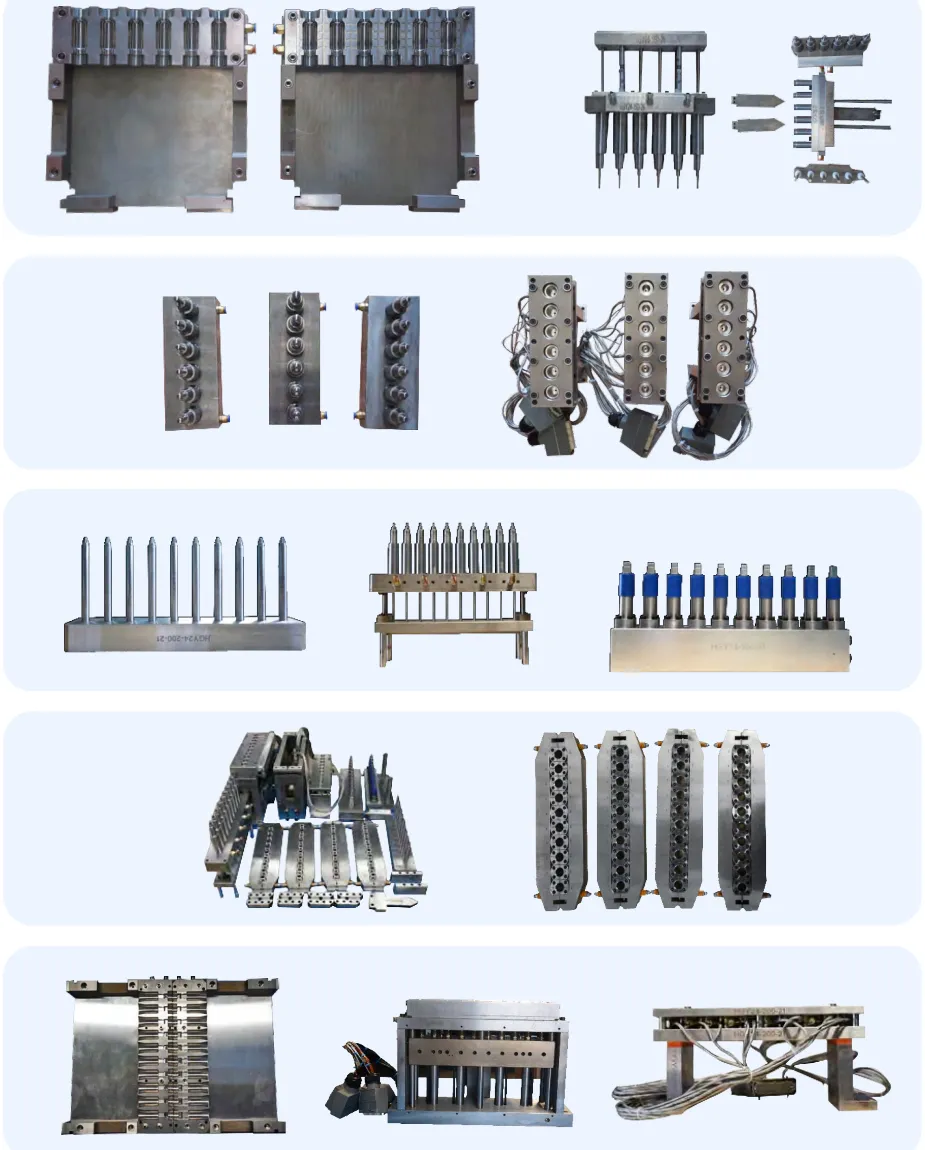
Ever-Power ISBM machine manufacturing facility — precision engineering at scale
Three-Station Series
Our three-station machines are purpose-built for processing engineering polymers such as PC, Tritan, and PPSU. With injection, stretch-blow, and ejection stations, they are ideal for producing feeding bottles, sports water cups, and medical-grade containers.
Four-Station Standard Series
The workhorse of our product line. Four-station machines add a dedicated temperature conditioning station between injection and stretch-blow, enabling precise thermal profiling for PET, PETG, and multi-material applications with volumes from 5 ml to 2500 ml.
Four-Station Servo Series
Fully servo-controlled for maximum precision and energy efficiency. Servo drives replace conventional hydraulic systems, delivering faster cycle times, quieter operation, and further energy reductions of up to 20% beyond our standard models.
Six-Station High-Output Series
For manufacturers requiring maximum throughput, our six-station machine adds additional conditioning and processing stations to dramatically increase output per cycle while maintaining the quality advantages of the one-step process.
Heavy-Duty Large Container Series
The EP-HGY650-V4 is engineered for producing large-volume containers and wide-mouth jars with clamping forces designed to handle bigger mold sizes and heavier shot weights, serving food packaging and industrial container markets.
Material Versatility: Beyond Standard PET
One of the areas where one-step ISBM machines hold a decisive technical advantage over their two-step counterparts is in the range of polymer resins they can process effectively. Two-step reheat-and-blow systems are overwhelmingly optimized for standard PET, because the infrared reheating ovens and spindle grippers used in these machines are designed around PET’s specific thermal characteristics, preform geometry, and crystallization behavior. Attempting to process amorphous polymers like polycarbonate (PC) or copolyesters like Tritan on a standard two-step reheat machine is impractical in most cases.
One-step machines, by contrast, inject the resin directly and maintain it in a controlled thermal state throughout the process. Because the preform never fully cools and is never handled by external grippers or spindles, the system can accommodate a much wider range of materials with very different processing windows. Ever-Power machines are proven in production with PET, PETG, PP (polypropylene), PC (polycarbonate), Tritan (a BPA-free copolyester widely used for infant and sports bottles), PPSU (polyphenylsulfone, used for autoclavable medical containers), PLA (polylactic acid, a biodegradable bioplastic), and several other specialty resins.
🍺
PET / PETG
Beverages, food, cosmetics
👶
PC / Tritan
Baby bottles, sports bottles
💊
PP / PPSU
Pharmaceutical, medical, autoclavable
🌿
PLA
Biodegradable, eco-friendly packaging
This multi-material capability is particularly important for manufacturers who serve diverse end markets or who anticipate shifting to newer, more sustainable materials in the coming years. A single Ever-Power one-step machine can produce PET cosmetic bottles in the morning, switch to Tritan baby bottles in the afternoon, and run a batch of PP pharmaceutical vials the next day — all without any major mechanical modifications, just a mold change and process parameter adjustment.
Mold Compatibility: Protecting Your Existing Tooling Investment
For many manufacturers, the decision to upgrade or replace aging ISBM equipment is complicated by the substantial investment they have already made in mold tooling. Precision ISBM molds — particularly multi-cavity production molds — represent a significant capital investment, often costing tens of thousands of dollars per set. The prospect of having to scrap or rebuild an entire mold library when switching machine vendors is a major deterrent to equipment modernization.
Ever-Power has specifically engineered its machines to accept molds originally designed for Japanese ASB and Aoki ISBM systems. This “plug-and-play” compatibility means that manufacturers who are currently running older ASB or Aoki equipment can transition to a new Ever-Power machine and begin production immediately using their existing mold sets — with no retooling, no mold modifications, and no trial-and-error adaptation period. The bolt patterns, platen dimensions, cooling connections, and preform core rod interfaces on Ever-Power machines have been designed to match the specifications of these widely-installed Japanese platforms.
Ever-Power assembly workshop — machines engineered for ASB and Aoki mold compatibility
This compatibility is particularly valuable for companies in Europe, North America, and Southeast Asia where large installed bases of ASB and Aoki machinery exist. As these older machines reach the end of their productive service life or become increasingly expensive to maintain due to discontinued spare parts, Ever-Power provides a modern, energy-efficient, and fully supported upgrade path that preserves the value of existing tooling assets. It is this combination of advanced one-step technology, multi-material capability, and legacy mold compatibility that has established Ever-Power’s reputation among injection stretch blow molding machine manufacturers worldwide.
Industry Applications of One-Step ISBM Technology
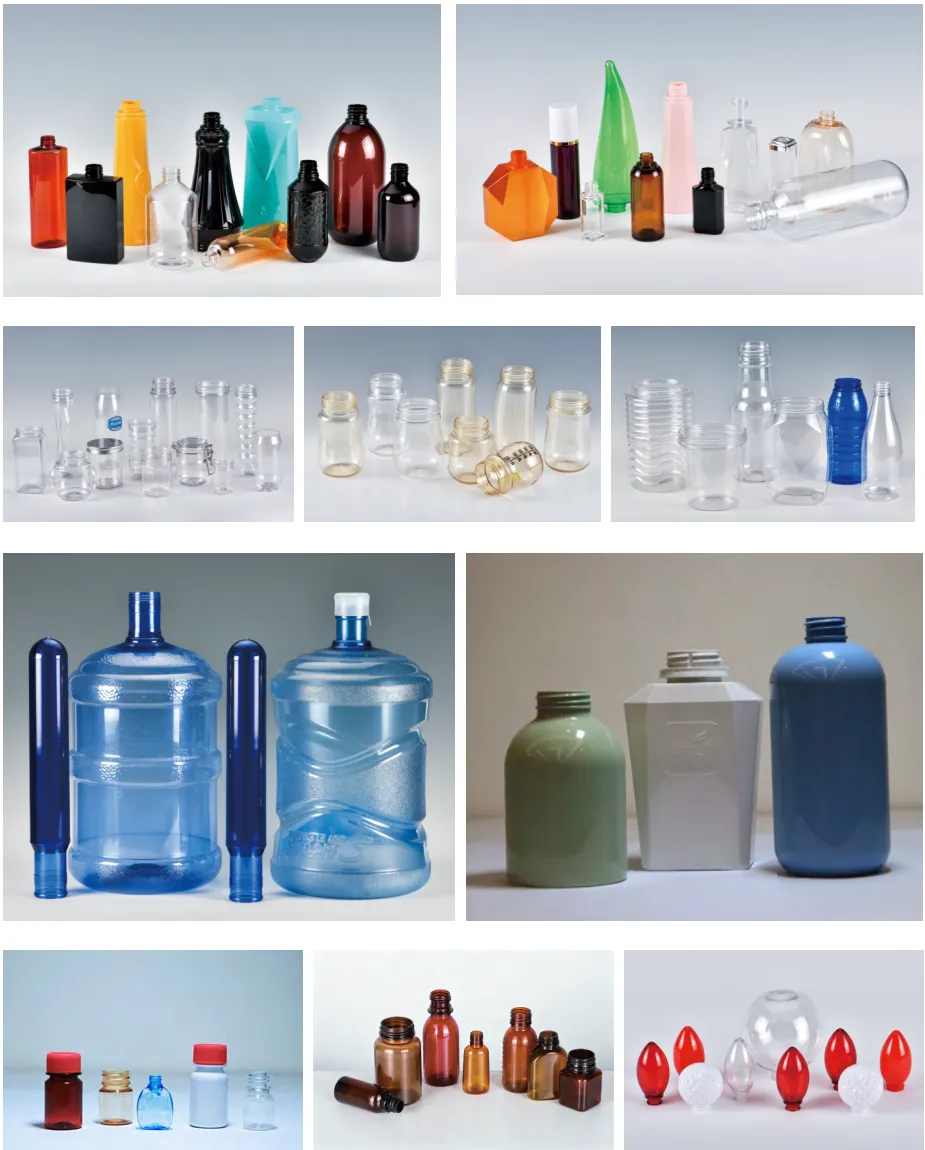
The versatility of one-step ISBM machines enables them to serve an exceptionally broad range of industries. Here is how different sectors benefit from this technology:
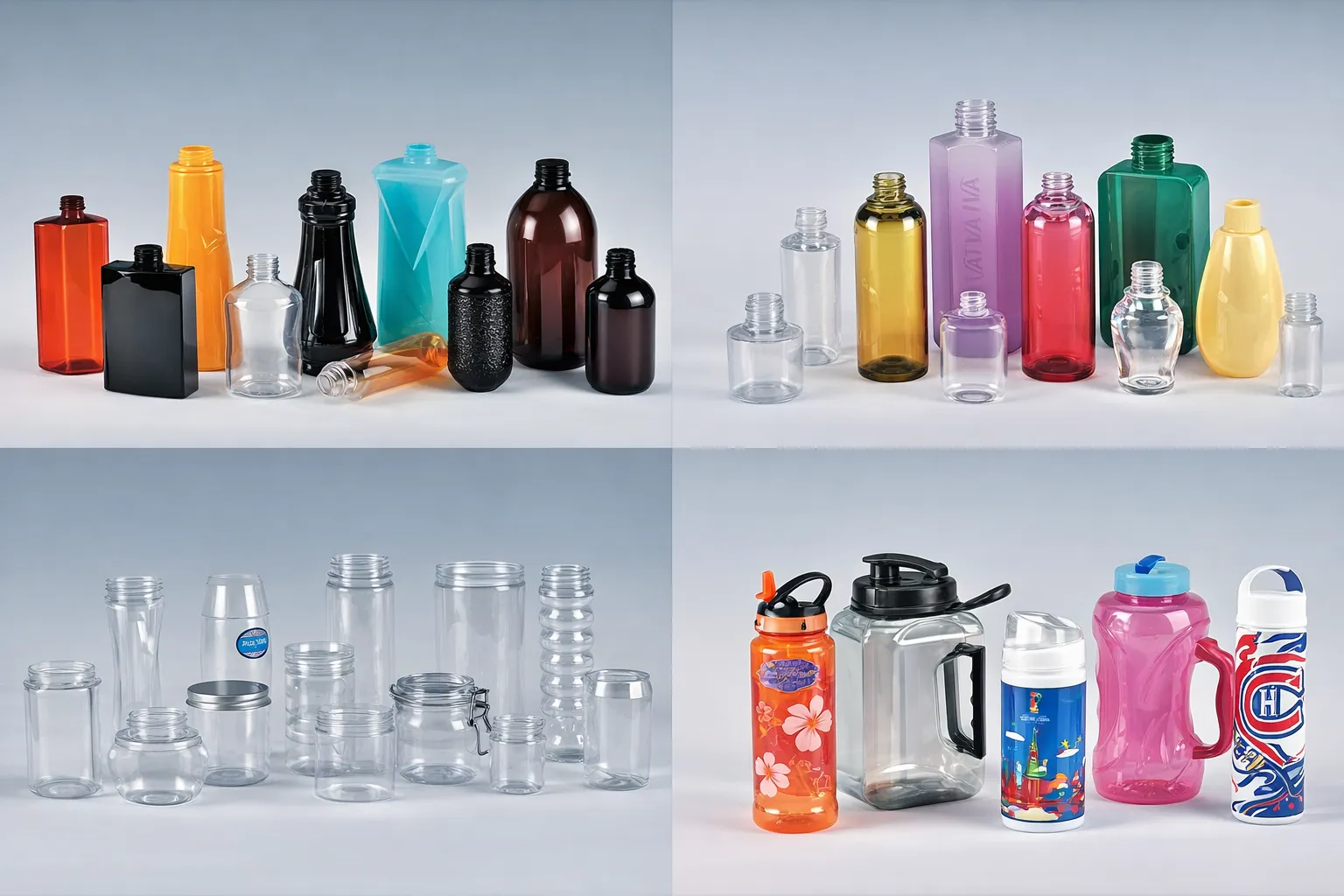
Diverse bottle types produced on Ever-Power one-step ISBM machines
Understanding Biaxial Orientation: The Science Behind Superior Bottles
The term “biaxial orientation” refers to the simultaneous stretching of the polymer material in two perpendicular directions — axially (lengthwise, by the mechanical stretch rod) and radially (outward, by the compressed air). This dual-direction stretching is the defining technical feature that separates ISBM from simpler blow molding methods like extrusion blow molding (EBM) or basic injection blow molding (IBM), and it is responsible for the dramatically superior physical properties of ISBM-produced containers.
When a semi-crystalline polymer like PET is stretched at the right temperature and at the right rate, its molecular chains — which are normally randomly coiled and tangled — become aligned in the direction of stretching. In biaxial orientation, chains align in both the machine direction and the transverse direction, creating a dense, interlocking molecular network that is far stronger and more resistant to gas permeation than the original unoriented material. This is not a surface treatment or a coating; it is a fundamental restructuring of the material at the molecular level.
The practical benefits of biaxial orientation include a 30% or greater increase in tensile strength, significantly improved impact resistance (bottles can withstand drops from greater heights without cracking), enhanced gas barrier performance (extending the shelf life of carbonated beverages and oxygen-sensitive pharmaceuticals), improved optical clarity (the aligned molecular structure refracts light more uniformly), and the ability to down-gauge — that is, to achieve the same or better performance with a thinner wall and less raw material per bottle.
In a one-step machine, the stretch-blow station parameters — stretch rod speed, pre-blow timing, final blow pressure, and stretch ratio — are precisely synchronized with the thermal profile established in the conditioning station. Because the conditioning station has direct knowledge of the preform’s injection history (same machine, same cycle), the thermal profile can be much more precisely controlled than in a two-step system where the reheated preform’s internal temperature distribution depends on variables like oven lamp spacing, preform wall thickness variations, and ambient temperature fluctuations.
Addressing Common Misconceptions
Over the years, several myths about one-step ISBM have persisted in the industry. Let us address the most common ones directly:
“One-step machines are only for small production volumes.”
This was arguably true decades ago when early single-stage machines had limited cavity counts and long cycle times. Modern one-step machines from Ever-Power, particularly the multi-cavity four-station and six-station models, achieve output rates that are competitive with two-step systems across a wide range of medium-volume applications. And when you factor in the total system efficiency — including the elimination of preform handling, storage, and reheating — the effective throughput per unit of capital investment and energy consumed is often superior.
“Two-step gives you more flexibility because you can buy preforms from external suppliers.”
While it is true that two-step users can purchase preforms from third-party preform manufacturers, this introduces supply chain dependency, transportation costs, lead times, minimum order quantities, and quality variability. With a one-step machine, you control the entire process in-house, from raw resin to finished bottle, giving you complete independence and faster time-to-market for new products or design changes.
“Switching from Aoki or ASB to another brand means losing your mold investment.”
This is one of the most persistent barriers to equipment modernization, and Ever-Power has specifically addressed it. All Ever-Power one-step ISBM machines are engineered to be fully compatible with existing Aoki and ASB mold tooling. You can install your current molds on a new Ever-Power machine and start production without any modifications — protecting your existing tooling investment while gaining access to modern servo drives, improved energy efficiency, and enhanced automation features.
Sustainability and Environmental Considerations
As environmental regulations tighten worldwide and consumer demand for sustainable packaging grows, the manufacturing process itself has come under increasing scrutiny. One-step ISBM technology offers several inherent sustainability advantages that are becoming increasingly important to brand owners, regulatory bodies, and consumers alike.
The energy savings alone translate directly into a reduced carbon footprint per bottle produced. When you eliminate the reheating step that consumes the most electricity in a two-step system, you are removing the single largest source of greenhouse gas emissions associated with the blow molding phase of container production. For manufacturers who are reporting their Scope 2 emissions or who have committed to carbon reduction targets, this is a measurable and documentable improvement.
The higher material utilization rate of the one-step process also contributes to sustainability. Less scrap material means less resin needs to be purchased, transported, and processed in the first place. And the ability to lightweight bottles through improved biaxial orientation means that the same functional performance can be achieved with fewer grams of plastic per container — a direct reduction in material consumption that multiplies across millions of bottles per year.
Furthermore, Ever-Power machines are compatible with PLA and other biodegradable resins, giving forward-thinking manufacturers the ability to produce compostable containers on the same equipment they use for conventional plastics. As the regulatory landscape continues to evolve toward extended producer responsibility (EPR) frameworks and circular economy mandates, this flexibility will become an increasingly valuable asset.
Frequently Asked Questions
What does ISBM stand for?
ISBM stands for Injection Stretch Blow Molding. It is a manufacturing process that combines injection molding, mechanical stretching, and blow molding to produce hollow plastic containers with biaxially oriented walls. The process is available in both one-step (single-stage) and two-step (two-stage) configurations, as detailed throughout this article.
What bottle sizes can a one-step ISBM machine produce?
Ever-Power one-step ISBM machines can produce containers ranging from as small as 5 ml (such as eye-drop bottles and sample vials) to as large as 2500 ml (such as large beverage bottles and wide-mouth food jars). The specific size range depends on the machine model and the mold configuration. Our team can advise on the optimal machine selection for your target container sizes.
Can I use my existing Aoki or ASB molds on an Ever-Power machine?
Yes. Ever-Power machines are specifically designed for full compatibility with molds originally manufactured for Japanese ASB and Aoki ISBM systems. You can install your existing mold sets on a new Ever-Power machine and begin production immediately without any tooling modifications. This makes Ever-Power an attractive option for manufacturers seeking a modern replacement of Aoki injection stretch blow molding machines or ASB equipment that has reached end-of-life.
How much energy does a one-step machine save compared to two-step?
One-step ISBM machines typically consume 30 to 40 percent less energy than equivalent two-step systems. The primary source of savings is the elimination of the infrared reheating stage required in two-step processes. Additional savings come from the servo-driven hydraulic systems and energy-efficient barrel heating technologies used in modern Ever-Power machines.
What is the difference between IBM and ISBM?
IBM (Injection Blow Molding) is a three-stage process where the preform is injected, transferred to a blow mold, and blown — but without the mechanical stretching step. ISBM (Injection Stretch Blow Molding) adds a mechanical stretch rod that elongates the preform before and during blowing, creating biaxial molecular orientation. This orientation gives ISBM bottles significantly better strength, clarity, and barrier properties than IBM bottles. For demanding applications, ISBM is the preferred technology.
Does Ever-Power provide after-sales support and spare parts?
Yes. Ever-Power provides comprehensive after-sales service including remote technical support, on-site installation and commissioning, operator training, preventive maintenance programs, and a full inventory of genuine spare parts. Our global service network ensures that customers in North America, Europe, Southeast Asia, South America, and the Middle East have access to responsive local support.
⚙
Ready to Explore One-Step ISBM Technology?
Whether you are launching a new production line, upgrading aging equipment, or evaluating alternatives from leading injection stretch blow molding machine manufacturers, Ever-Power is here to help. Our engineering team can provide detailed technical consultations, machine recommendations based on your specific container requirements, and competitive quotations for any model in our product line.
Visit isbm-machine.com | Email: [email protected] | Phone: +1 323 835 1155