Understanding the Two Core Blow Molding Processes
Plastic bottle manufacturing sits at the heart of packaging for pharmaceuticals, beverages, cosmetics, and household chemicals. Two processes dominate the landscape: injection blow molding (IBM) and stretch blow molding (SBM). While both start with melted resin and end with a hollow container, the engineering paths they follow — and the products they deliver — differ in fundamental ways. Choosing between them can determine unit cost, product clarity, shelf appeal, barrier performance, and even the footprint of your production floor.
This guide walks you through the mechanics, advantages, limitations, and ideal use cases of each method so that engineers, procurement managers, and business owners can make an informed decision. We draw on decades of manufacturing experience and real-world production data collected across thousands of molding projects. Whether you are scaling up a pharmaceutical line or launching a new personal-care brand, the information below will help you match the right technology to your exact requirements.
Before diving into each process, it helps to visualize the larger blow-molding family tree. Extrusion blow molding (EBM), injection blow molding (IBM), and stretch blow molding (SBM) each occupy a distinct niche. IBM and SBM share an injection-molded preform step, which is why they are frequently compared head to head. Let us explore how they actually work.
How Injection Blow Molding (IBM) Works
Stage 1 — Injection
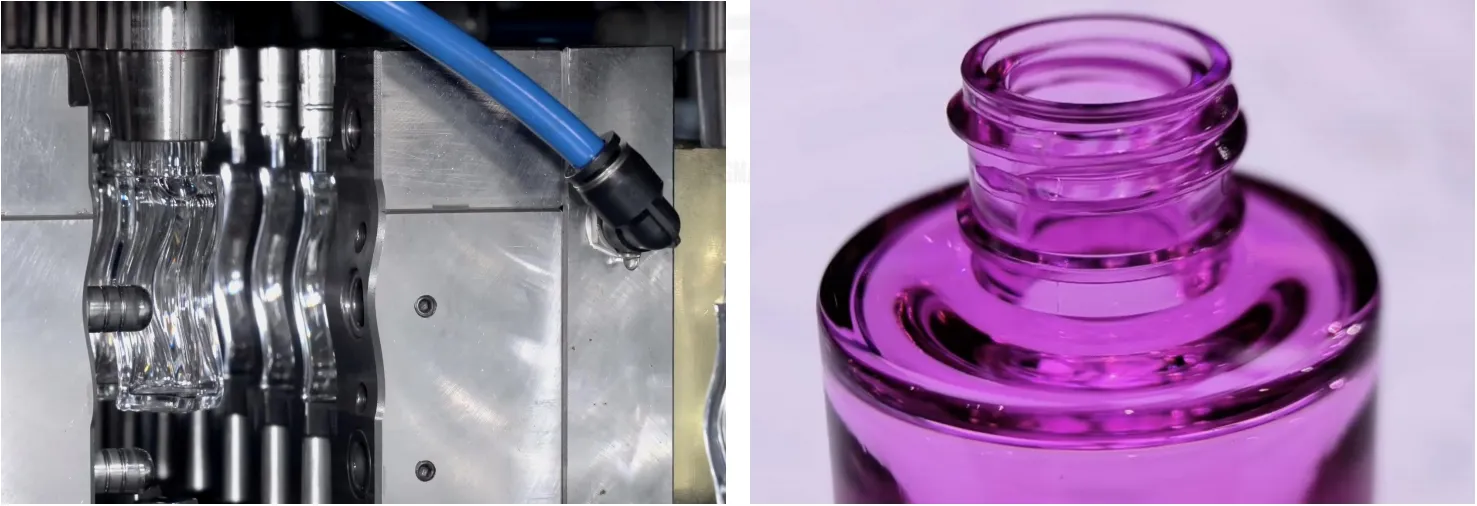
Molten resin is injected around a core rod inside a parison mold. This creates a test-tube-shaped preform with a perfectly finished neck. The neck threads, lip seals, and tamper-evident features are formed to their final dimensions in this single shot — no further trimming is needed.
Stage 2 — Blow Molding
The core rod, still carrying the hot parison, rotates into the blow station. Compressed air inflates the soft preform against the cavity walls. Because the parison has not been axially stretched, the molecular orientation remains largely random — adequate for small, round containers but not ideal for demanding barrier applications.
Stage 3 — Ejection
After the blow mold opens, the finished bottle is stripped from the core rod and conveyed to the packing line. The entire cycle — injection, transfer, blow, and ejection — happens continuously in one integrated machine, which simplifies plant layout and reduces work-in-progress inventory.
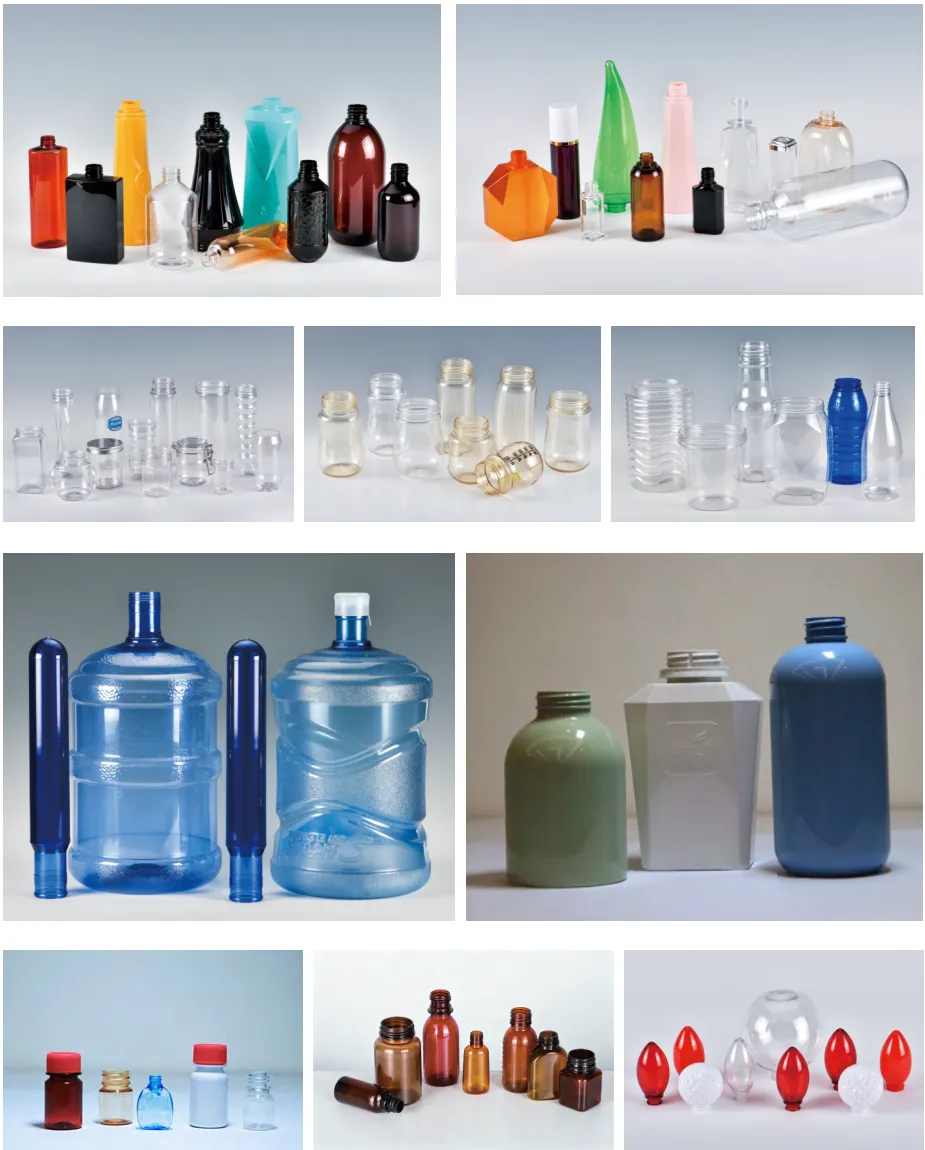
The IBM process is valued for its ability to produce small bottles — typically from 1 mL up to about 500 mL — with extremely precise neck finishes and uniform wall thickness. It is the preferred method for pharmaceutical bottles, cosmetic jars, and medical-grade containers where dimensional accuracy matters more than raw output speed. Because there is no flash or moil to trim, scrap rates tend to be very low, and each bottle leaves the machine ready for filling.
How Stretch Blow Molding (SBM) Works
Stretch blow molding adds a critical mechanical step: before air inflation, a stretch rod physically pushes the preform downward, elongating it along its vertical axis. The combination of axial stretching and radial blowing produces biaxial molecular orientation in the finished container. This orientation is the reason PET water bottles can be so thin yet so strong, and it accounts for the brilliant optical clarity consumers associate with premium beverages.
One-Step (Single-Stage) SBM
In a ماكينة نفخ وتشكيل بالحقن أحادية المرحلة, the preform is injection-molded, conditioned to the optimal stretch temperature, stretched, and blown in one continuous sequence without ever cooling to room temperature. This preserves latent heat from injection, cutting energy consumption by roughly 20–30 percent compared with the two-step alternative. It also means you do not have to buy, store, or transport preforms from an outside supplier — everything happens under one roof.
One-step machines are ideal for short to medium production runs, specialty shapes, wide-mouth jars, and custom-colored containers. They give the operator complete control over preform design without the constraints imposed by commodity preform vendors.
Two-Step SBM
The two-step method separates injection molding and stretch blow molding into independent operations. Preforms are made on a standalone injection molding machine, cooled, stored, and later reheated in an infrared oven before being stretched and blown on a dedicated SBM machine. High-speed rotary two-step systems can exceed 80,000 bottles per hour — numbers that no single-stage machine can match.
Two-step SBM dominates the carbonated soft drink, water, and juice industries where volume justifies the added capital for preform inventory handling. It also allows bottlers to purchase preforms from multiple suppliers, creating supply-chain flexibility.
Key Differences at a Glance
The table below summarizes the most important engineering and commercial distinctions between injection blow molding and stretch blow molding. Each factor can influence which method is best for a given product and market.
Material Selection and Molecular Orientation
The resin you choose often decides the process before any other variable comes into play. Injection blow molding handles polyethylene (HDPE and LDPE), polypropylene, and polystyrene with ease. These semi-crystalline and amorphous polymers do not need — and in many cases do not benefit from — the extreme biaxial stretching that SBM provides. An HDPE pharmaceutical bottle gains nothing from being stretched the way a PET water bottle does; its crystalline structure and opacity are already well suited to the job.
Stretch blow molding, on the other hand, unlocks the full potential of PET by orienting its polymer chains in two directions. This biaxial orientation increases tensile strength by as much as three to five times compared with unoriented PET, improves gas-barrier properties (critical for carbonated drinks), and produces the glass-like transparency that makes PET the material of choice for water and soft-drink bottles worldwide. Some PP grades also respond well to stretch blow molding, enabling hot-fill capability up to approximately 100 °C.
When evaluating a project, start with the material. If PET clarity or barrier performance is essential, SBM is almost always the answer. If your product calls for an opaque HDPE or PP container under 500 mL and dimensional precision is paramount, IBM is likely the better fit.
Production Speed, Scalability, and Cost Analysis
IBM Throughput
A typical three-station rotary IBM machine produces roughly 3,000–6,000 bottles per hour per cavity set. Multi-cavity configurations can push total output higher, but the process is inherently limited by the injection cycle time and the need to transfer the hot parison without distortion. For many pharmaceutical and cosmetics applications, this output is more than sufficient because batch sizes are moderate and changeover flexibility matters more than peak speed.
SBM Throughput
Two-step rotary SBM lines can reach 60,000–90,000 bottles per hour — an order of magnitude faster. Even single-stage ISBM machines typically run 2,000–8,000 bottles per hour, depending on cavity count and container size. The speed advantage becomes most significant when a single SKU runs for weeks at a time, amortizing changeover costs over millions of units.
From a capital-expenditure perspective, IBM equipment tends to cost less up front than a comparable ISBM line, although the gap narrows quickly once you factor in ancillary equipment like chilled-water systems and clean-room integration. On a per-unit basis, the material savings offered by SBM’s light-weighting capability — PET bottles can be 20–40 percent lighter than IBM equivalents of similar volume — often deliver the lowest total cost for high-volume beverage programs.
Mold costs differ as well. IBM molds are generally less expensive because they involve only a parison mold and a blow mold, both relatively compact. SBM tooling adds preform molds (often hot-runner, multi-cavity), blow molds, and stretch-rod assemblies, making the initial mold investment higher. For shorter runs, that tooling cost can be decisive. Many converters maintain IBM capacity specifically for niche products and keep SBM lines for high-runners.
Quality, Surface Finish, and Dimensional Tolerances
Both IBM and SBM deliver bottles without a parting-line pinch-off, so there is no visible flash scar at the base — a clear advantage over extrusion blow molding. The injection-molded neck finish on both processes is essentially identical in precision: threads, tamper bands, and sealing surfaces can be held to tolerances within ±0.05 mm, satisfying the stringent requirements of child-resistant and tamper-evident closures.
Where SBM pulls ahead is wall uniformity in the body. The stretch rod centers the material distribution from bottom to top before air inflation takes over. With proper process control, wall-thickness variation around the circumference can be kept below ±5 percent — a level that IBM approaches but seldom matches on larger containers because the parison does not undergo the same controlled pre-distribution.
Surface gloss and transparency are closely tied to molecular orientation. A biaxially oriented PET bottle has an almost mirror-like surface because the stretched molecules pack tightly, reducing light scatter. IBM bottles in HDPE or PP will always be translucent or opaque due to the crystalline morphology of those polymers, not because of any process deficiency.
Consistency from shot to shot is a separate but equally important quality metric. Modern servo-driven machines in both categories have largely eliminated the variability that once plagued hydraulic systems, and real-time monitoring of injection pressure, blow pressure, stretch speed, and cooling time enables statistical process control at six-sigma levels. If you are evaluating مصنعي آلات حقن وتشكيل القوالب بالنفخ, look for suppliers who provide built-in SPC dashboards and remote-access diagnostics — these features pay for themselves through reduced downtime and reject rates.
Applications by Industry
Pharmaceuticals
IBM dominates here. HDPE and PP bottles from 30 mL to 300 mL with accurate neck finishes for CRC (child-resistant closure) caps, desiccant canisters, and induction seals. Clean-room-compatible machines with stainless-steel frames and HEPA-filtered air are standard.
Beverages
SBM is the undisputed leader. PET bottles from 200 mL to 2 L for water, CSD, juice, and sports drinks rely on biaxial orientation for CO₂ barrier, light weight, and sparkling clarity. Two-step lines service the highest volumes, while single-stage machines handle specialty shapes and short runs.
Cosmetics & Personal Care
Both processes compete. Small perfume bottles and nail-polish containers favor IBM. Larger PET shampoo bottles, clear body-wash containers, and premium skincare packaging that demands a high-gloss look often shift to single-stage SBM for its superior clarity and lighter weight.
Household & Industrial Chemicals
HDPE bottles for bleach, cleaning sprays, and automotive fluids are usually extrusion blow molded, but when tight neck tolerances and zero flash are required — such as for child-safe closures on pesticide containers — IBM becomes the process of choice.
When to Choose Injection Blow Molding
IBM earns its place on the production floor in a number of well-defined scenarios. First, when the container volume is small — generally below 300 mL — and the neck diameter is large relative to the body. Think of a wide-mouth pill bottle or a compact perfume vial. In these cases, the stretch ratio possible with SBM may actually be too limited to provide meaningful orientation benefits, and the added mechanical complexity would not pay off.
Second, IBM shines whenever dimensional accuracy of the neck is the single most critical requirement. Although SBM also produces excellent necks, the IBM process involves fewer handling steps between injection and final blow, reducing the chance of subtle distortion. For pharmaceutical companies navigating strict FDA and cGMP documentation requirements, this simplicity can translate into faster regulatory approval and easier process validation.
Third, consider IBM when your resin of choice is HDPE, LDPE, or PS. These materials are not stretch-friendly, so the incremental cost and complexity of an SBM line offers little return. A three-station IBM machine with a small footprint, low energy draw, and fast mold changes will serve you better.
Finally, IBM is worth considering for any product that requires absolute zero flash. Extrusion blow molding always leaves a witness mark or moil that must be trimmed, and even SBM can produce a gate vestige that may need post-processing. IBM bottles, by contrast, come out of the mold with a clean base and a finished neck — no trimming, no reaming, no downstream labor.
When to Choose Stretch Blow Molding
The decision to go with SBM usually starts with one of two drivers: material performance or production volume. If your application demands the clarity, barrier properties, and strength that only biaxially oriented PET can deliver, SBM is the only viable path. No other blow-molding process can match the combination of light weight and structural integrity that a properly stretched PET bottle achieves.
Volume is the second major consideration. If your annual requirement exceeds a few million bottles, the economics of SBM — especially two-step SBM — will almost certainly undercut IBM on a per-unit basis. The faster cycle times, higher cavity counts, and material savings from light-weighting add up quickly. Even at more moderate volumes, a single-stage ISBM machine can be competitive because it eliminates preform logistics.
Hot-fill applications are another area where SBM wins decisively. PP containers that must withstand fill temperatures above 85 °C benefit from the structural reinforcement that comes with biaxial orientation. Heat-set PET bottles — used for juice and isotonic drinks — take this a step further, with in-mold annealing that allows fill temperatures up to 95 °C without paneling or distortion.
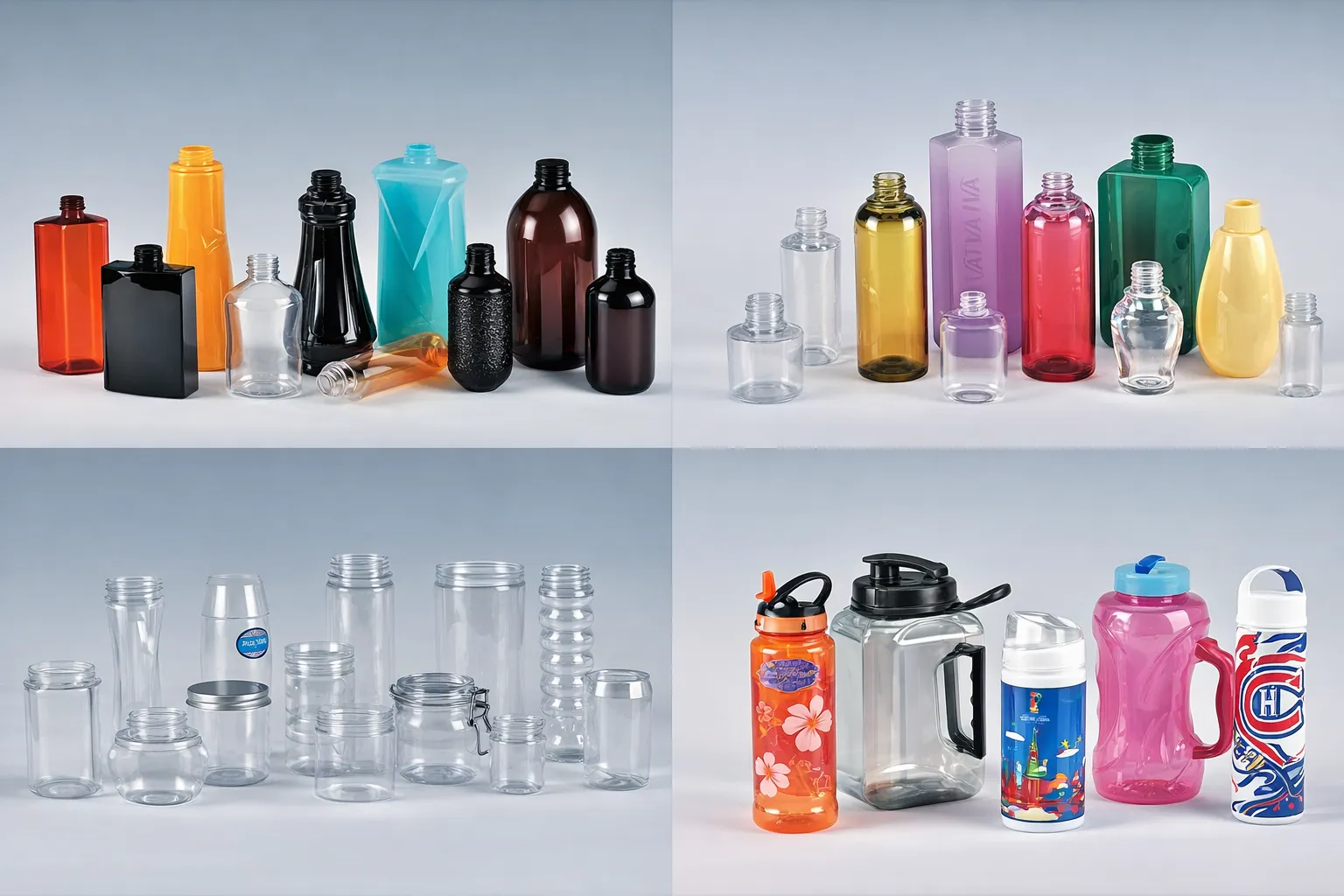
Custom container shapes are a growing reason to invest in single-stage ISBM. Because the preform is made and blown in one machine, designers can experiment with wall-thickness profiles, oval cross-sections, handles, and asymmetric geometries that would be impractical with off-the-shelf preforms. This creative freedom is especially valued in the cosmetics, spirits, and specialty food segments.
The Hybrid Approach: Injection Stretch Blow Molding (ISBM)
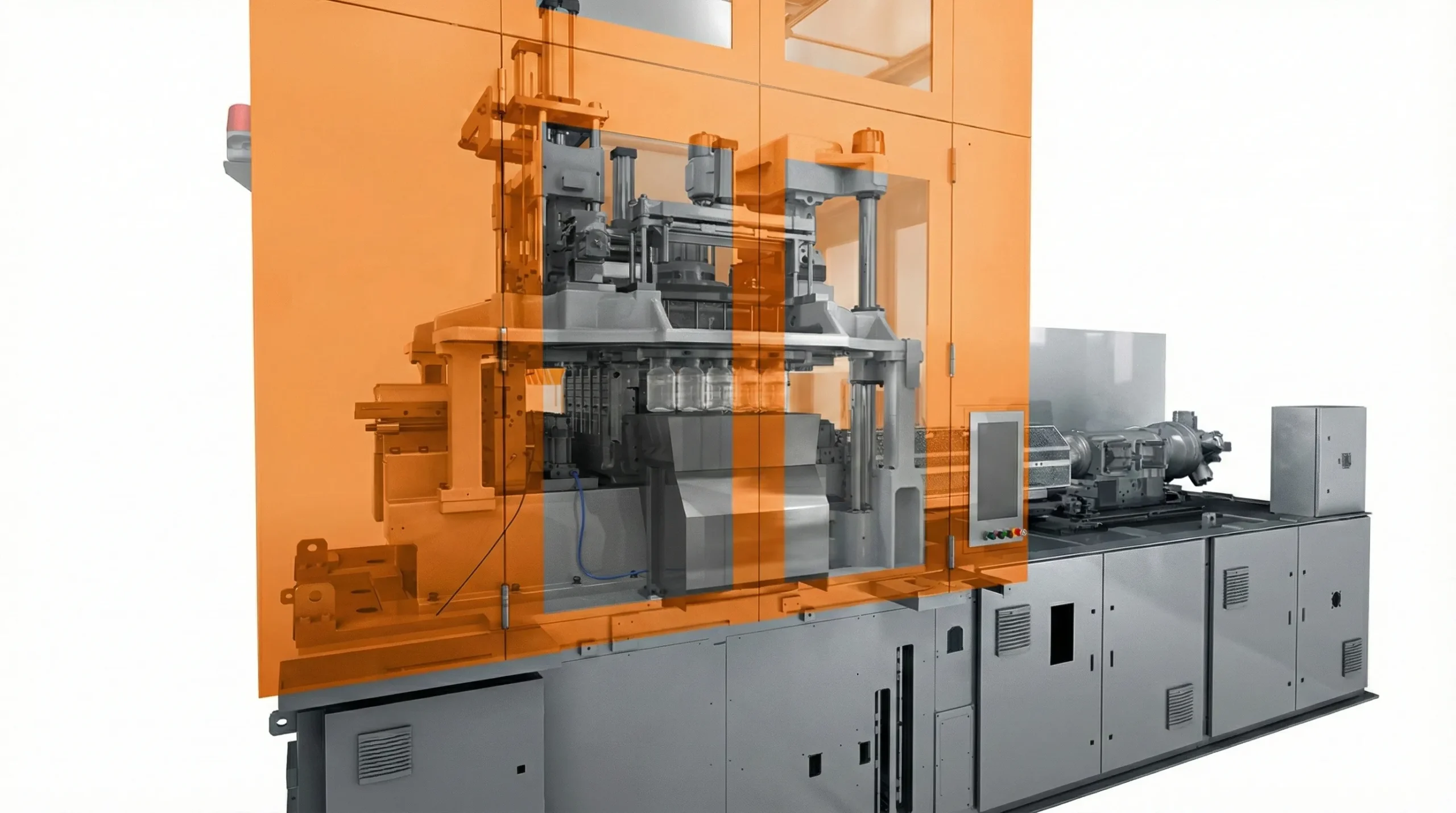
The single-stage ISBM process deserves its own discussion because it combines the best elements of both IBM and SBM. In one integrated machine, resin is injection-molded into a preform, conditioned, stretch-blown into a finished container, and ejected — all without intermediate cooling or manual handling. This process minimizes energy consumption, floor-space requirements, and operator involvement while still producing biaxially oriented containers with excellent clarity and strength.
For converters who need the flexibility to run multiple SKUs on the same line — switching between 50 mL cosmetic bottles and 500 mL food jars, for example — single-stage ISBM provides a compelling balance of versatility and performance. The growing demand for sustainable packaging is also favoring ISBM because lighter bottles mean less resin per unit and a smaller carbon footprint, aligning with corporate ESG goals.
Historically, Aoki machines set the standard for this process category. However, the current market offers multiple high-performance alternatives. Manufacturers seeking a استبدال آلات نفخ القوالب بالحقن والتمديد من شركة أوكي now have access to updated platforms from several global suppliers that deliver equivalent or superior clamping force, shot consistency, and energy efficiency — often at a more attractive price point with better access to spare parts and technical support.
The ISBM category has also benefited from advances in servo-hydraulic drives, touch-screen HMI controls, and IoT-enabled predictive maintenance. These features make modern machines easier to operate and maintain, reducing the skill barrier and helping smaller converters compete with larger players.
Choosing the Right Machine Partner
What to Look for in an ISBM Machine Manufacturer
Selecting an مصنع آلات ISBM is not just a procurement decision — it is a long-term partnership that affects uptime, quality, and profitability for years. Look beyond the initial machine price and evaluate factors such as after-sales engineering support, spare-parts lead times, software upgrade pathways, and the manufacturer’s track record with your specific resin and container type. A reputable supplier should be willing to run trial molds at their facility so you can verify output quality before committing to a purchase order.
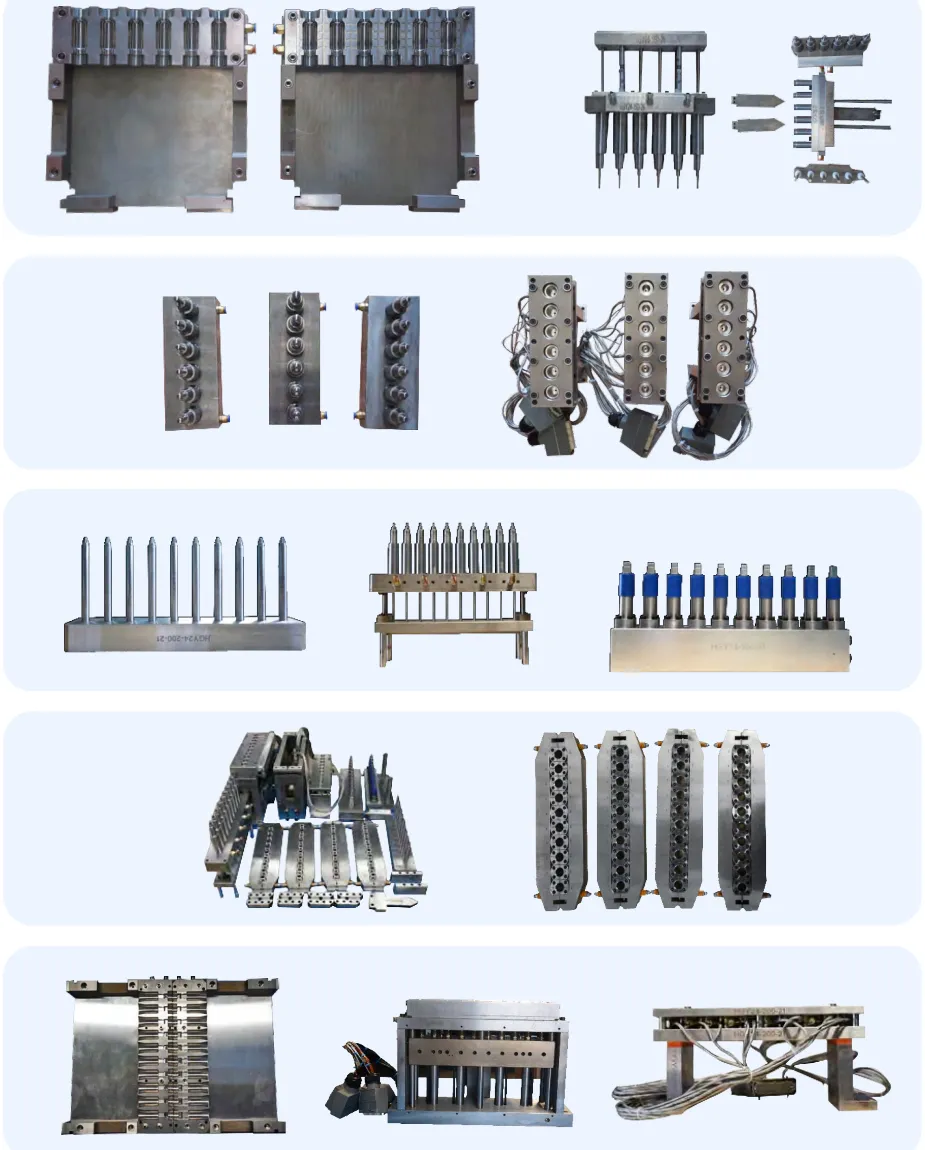
If you are a converter looking for an مورد آلات حقن القوالب ISBM, prioritize partners who offer complete mold-design support in addition to machine sales. The mold is at least as important as the machine when it comes to achieving consistent wall thickness, proper venting, and fast cycle times. Suppliers who design their own molds in-house can optimize preform geometry, gate location, and cooling-channel layout specifically for their machine platform, reducing the trial-and-error period after installation.
The secondary market is also active. For operations launching on a tighter budget or adding capacity for a limited-run contract, searching for a reliable آلة ISBM للبيع can cut lead times from months to weeks. Reputable dealers refurbish machines to OEM specifications, replace worn screws and barrels, update control software, and provide warranty coverage that rivals new-equipment programs. Just be sure to request inspection reports and production-history logs before finalizing any used-equipment transaction.
Sustainability, rPET, and Future Trends
Sustainability concerns are reshaping the blow molding industry faster than almost any other factor. Extended Producer Responsibility (EPR) legislation in the EU, Canada, and several U.S. states is driving brand owners to increase recycled content, reduce container weight, and design for recyclability. Both IBM and SBM are adapting, but in different ways.
For SBM, the transition to rPET (recycled PET) is well under way. Most modern single-stage and two-step SBM lines can process up to 100 percent rPET, although intrinsic viscosity must be carefully managed to maintain stretch performance. Light-weighting continues to push boundaries: some 500 mL water bottles now weigh as little as 7.5 grams, a reduction of nearly 60 percent compared with bottles produced twenty years ago. Every gram removed from a bottle translates to hundreds of tons of resin saved annually at scale.
IBM is responding with PCR-HDPE formulations and bio-based polyethylene derived from sugarcane. While these resins do not require the biaxial orientation step, they bring their own processing challenges — slightly different melt flow characteristics and color variation that must be compensated for through adjusted barrel temperatures and hold pressures.
Looking further ahead, digital twin technology is entering the blow molding space. Machine OEMs are beginning to offer simulation platforms that model preform heating profiles, stretch-rod kinematics, and air-flow dynamics before a single physical preform is made. These tools shorten mold development cycles, reduce trial runs, and help converters hit target specifications on the first production lot — saving both time and material.
Common Mistakes When Choosing Between IBM and SBM
After years of working with converters worldwide, we have noticed several recurring missteps that can lead to costly equipment choices. Understanding these pitfalls can save significant time and capital.
Over-specifying the machine
Buying a high-speed SBM line for a product that only needs 500,000 bottles per year wastes capital and floor space. A compact IBM or single-stage ISBM machine would be far more appropriate for lower volumes.
Ignoring resin compatibility
Attempting to stretch-blow HDPE or LDPE rarely works well because these polymers lack the strain-hardening behavior needed for stable biaxial stretching. Match the resin to the process before committing to tooling.
Underestimating mold costs
The machine may account for 60 percent of the initial investment, but molds and auxiliary equipment make up the rest. A thorough Total Cost of Ownership analysis should include mold amortization, spare-parts consumption, energy, and scrap.
Simplified Decision Framework
While every project has unique variables, the following logic covers roughly 80 percent of real-world scenarios. Start at the top and follow the branches that match your product requirements.
Path A
Material is PET or oriented PP?
Go SBM. If volume is under 5 million/year and you need design flexibility, choose single-stage ISBM. If volume exceeds 10 million/year for a standard shape, choose two-step SBM.
Path B
Material is HDPE, LDPE, or PS?
Go IBM. If volume is below 500 mL, the neck finish is critical, and you need zero flash, IBM is your best choice. For larger containers, evaluate extrusion blow molding as well.
For PP containers in the 200–1,000 mL range where clarity and hot-fill capability are both important, single-stage ISBM often emerges as the winning process. It delivers the biaxial orientation PP needs for structural integrity at elevated temperatures while keeping tooling and changeover costs manageable for mid-volume producers.
Energy Consumption and Operational Efficiency
Energy benchmarking studies show that single-stage ISBM uses approximately 1.8–2.5 kWh per kilogram of resin processed, while two-step SBM requires about 2.5–3.5 kWh per kilogram because of the reheat step. IBM falls in a similar range to single-stage ISBM for small containers because it avoids reheating but does not benefit from stretch-induced light-weighting, so the energy-per-bottle metric can be higher than SBM for equivalent-volume containers.
Compressed air is another significant cost center. IBM typically uses lower blow pressures (8–12 bar) than SBM (25–40 bar), because the lack of stretching means the parison does not need to be pushed as forcefully against the mold cavity. Reducing blow pressure by even 5 bar across an entire production year can save thousands of dollars in electricity for compressor operation.
Servo-electric drive systems have been a game-changer for both process families. Replacing hydraulic cylinders with servos cuts idle-energy consumption by 30–50 percent and allows precise, repeatable movements that improve container consistency shot after shot. When sourcing any new machine — whether IBM or SBM — insist on full-electric or at least servo-hybrid architecture to future-proof your operating costs.
Maintenance, Spare Parts, and Lifecycle Costs
The total cost of ownership for a blow molding machine extends well beyond the purchase price. Planned maintenance intervals, spare-part availability, and mean time between failures (MTBF) all feed into an accurate lifecycle cost model. IBM machines, with their fewer moving parts and lower operating pressures, generally require less maintenance than SBM lines. However, the stretch rod, infrared heaters, and high-pressure valves on SBM machines are well-proven components with established service schedules, so maintenance is predictable rather than problematic.
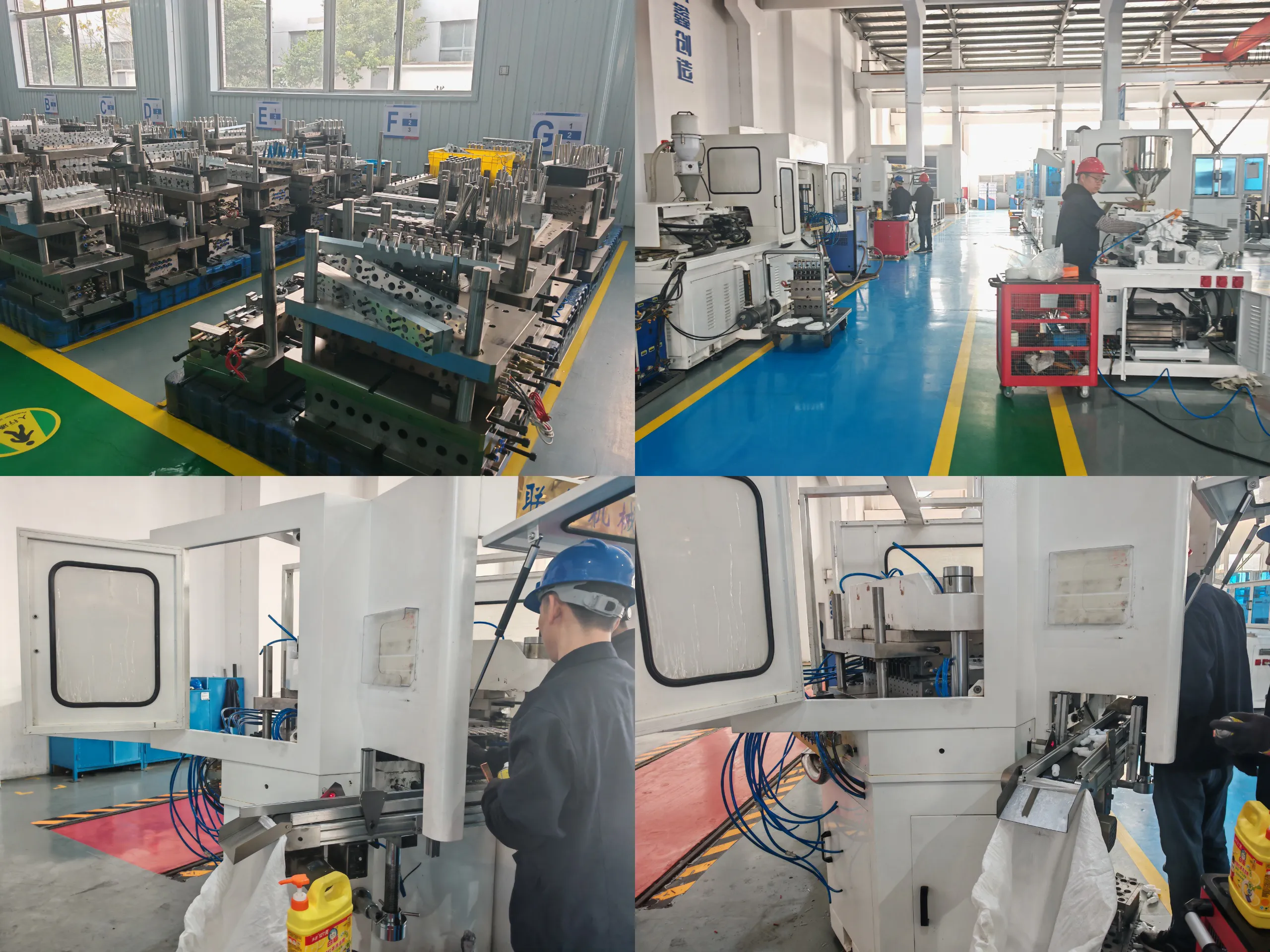
Spare-part sourcing can be a decisive factor for converters operating in regions where OEM support is limited. One practical advantage of buying from a diversified supplier rather than a niche brand is the breadth of the spare-part inventory. Companies that manufacture their own platens, tie bars, screws, and barrels in-house can ship replacement parts faster and at a lower cost than those who rely on third-party subcontractors.
Training is another often-overlooked cost component. A machine that is difficult to set up or troubleshoot will drive up labor costs and extend changeover windows. Modern machines with intuitive HMI screens, built-in diagnostic wizards, and remote-access capabilities reduce the training burden and help new operators become productive more quickly. When comparing proposals from different equipment suppliers, ask for a detailed training program and confirm whether remote support is included in the base price or billed separately.
Making the Right Choice for Your Business
The injection blow molding versus stretch blow molding debate does not have a universal winner. Each process occupies a well-defined territory in the packaging world. IBM excels for small, precise, flash-free containers in HDPE and PP. SBM — and its single-stage ISBM variant — dominates when PET clarity, biaxial strength, light-weighting, and high throughput are the priorities.
The best approach is to define your product specifications first — material, volume, neck finish, throughput, and decoration requirements — and then match those specifications to the process and machine that delivers the lowest total cost of ownership at the quality level your market demands. Engaging an experienced equipment partner early in the design phase can help you avoid costly detours and get to market faster.
At Ever-Power, we bring decades of hands-on manufacturing expertise to every project. Whether you need a turnkey ISBM production line, replacement tooling for your existing machines, or guidance on transitioning from IBM to ISBM for a new product launch, our engineering team is ready to help.
الأسئلة الشائعة
What is the main difference between injection blow molding and stretch blow molding?
The core difference lies in molecular orientation. Injection blow molding inflates a hot parison with air only, producing mostly random polymer orientation. Stretch blow molding first stretches the preform vertically with a mechanical rod and then inflates it, creating biaxial molecular orientation that significantly improves strength, clarity, and barrier properties.
Can I run PET on an injection blow molding machine?
Technically yes, but the result will not be a biaxially oriented container. Without stretching, PET bottles made on an IBM machine will be heavier, less clear, and weaker than their SBM counterparts. For PET applications, stretch blow molding is strongly recommended.
Is a single-stage ISBM machine suitable for beverage bottles?
Yes. Single-stage ISBM machines are widely used for PET and PP beverage containers, especially when production volumes are moderate or when the bottle design requires a custom preform shape. For ultra-high-volume standard shapes like 500 mL water bottles, two-step SBM typically offers better economics.
How do I evaluate injection stretch blow molding machine manufacturers?
Focus on their engineering depth, not just machine price. Key evaluation criteria include the manufacturer’s in-house mold design capability, servo-drive technology, energy-efficiency ratings, spare-part availability, after-sales training programs, and willingness to run production trials at their facility before you commit to a purchase. Requesting references from existing customers in your industry segment is also strongly recommended.
What resins work best with each process?
Injection blow molding is best suited to HDPE, LDPE, PP, and PS — materials that do not require biaxial stretching. Stretch blow molding excels with PET, PAN, PEN, and stretch-grade PP — resins that benefit from the strength and clarity gains of biaxial molecular orientation.